Costo de envío
Costo de envío
1. Envío gratuito[algunos]
2. Compras de 30.000 wones o más envío gratuito
Ubicación de envío
Ubicación de envío
Enviado por fabricantes ubicados en diversas partes de Corea
Política de envío
Política de envío
1. Reenvío inmediato si el producto se pierde después del envío.
2. Sustitución inmediata si el producto recibido está dañado.
3. Envío el mismo día [antes de las 12h] y recepción al día siguiente.
Empresa de envíos
Empresa de envíos
CJ Logistics, Rosen Delivery, Korea Post, Lotte Delivery, etc.
Tiempo de entrega estimado
Tiempo de entrega estimado
1. Compras antes de las 12:00: recepción del producto al día siguiente
2. Compras antes de las 14:00: recepción del producto al día siguiente [en algunos casos]
3. Compras después de las 12:00/14:00: recepción del producto 2 días después
Política de devoluciones
Política de devoluciones
1. Devoluciones aceptadas dentro de los 7 días posteriores a la recepción del producto.
2. Los productos que superen lo indicado en el anuncio podrán ser devueltos en un plazo de 3 meses.
3. Devoluciones aceptadas dentro de los 30 días siguientes a la fecha de conocimiento de tal hecho.
4. Los productos biológicos son productos de venta final y no se pueden devolver.
5. En caso de devolución simple, los gastos de envío de ida y vuelta correrán a cargo del comprador.
6. En caso de devolución por causa imputable al vendedor, los gastos de envío de ida y vuelta serán gratuitos.
Política de seguridad
Política de seguridad
Los pagos seguros se realizan a través de empresas de pago de renombre mundial como PayPal, Visa y MasterCard. La información de su pago no se comparte con ninguna institución.
Política de privacidad
Política de privacidad
Sus datos personales, recopilados para el pago y el envío, se protegerán de forma segura durante el envío y se eliminarán una vez completada la entrega.
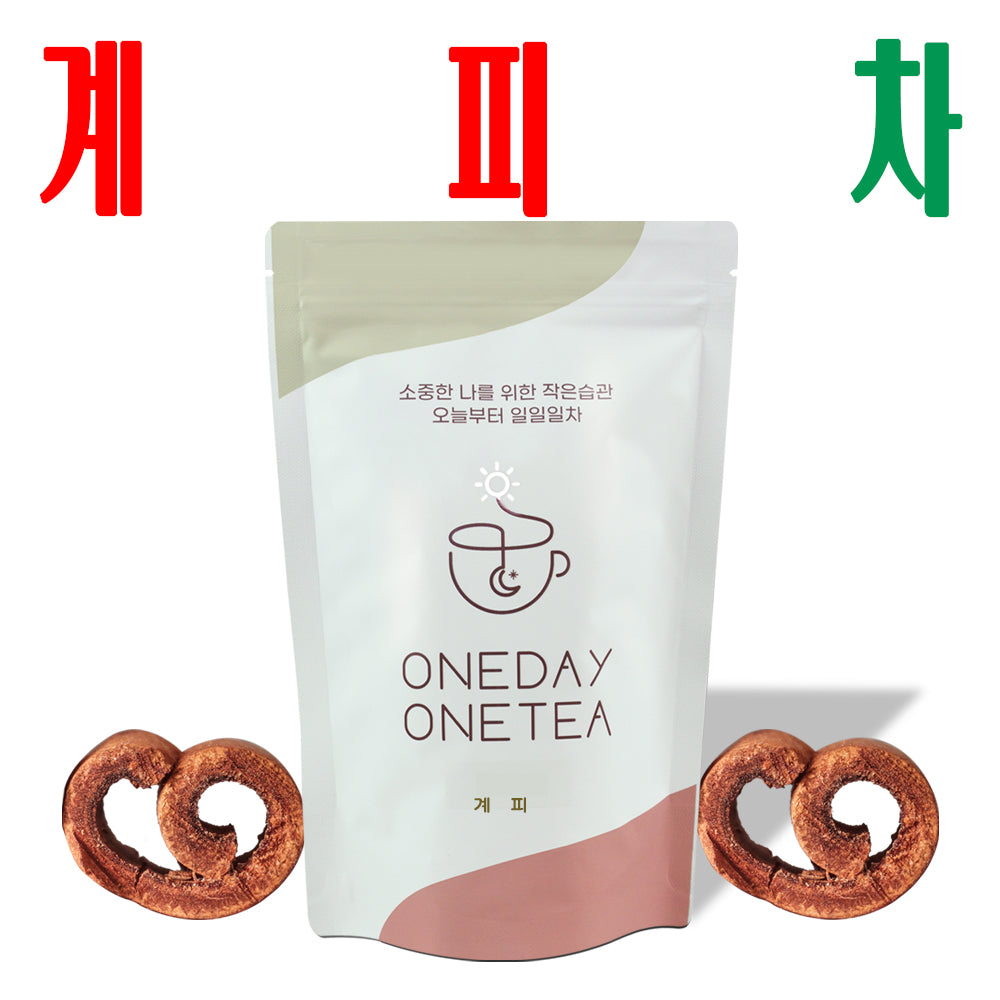
Cinnamon Tea / Cinnamon Tea Bag / Cinnamon Tea Bags (30 count)
Cinnamon Tea / Cinnamon Tea Bag / Cinnamon Tea Bags (30 count)
Cinnamon/Cassia
Cinnamon Tea/Cassia Tea/Cinnamon Teabag Tea/Cinnamon Teabag

|
||||||||||||||||
What is cinnamon tea?Cinnamon tea is a disposable teabag made from cinnamon. Simply steep the teabag in hot water for 1-2 minutes to enjoy the unique taste and aroma of cinnamon. Drinking cinnamon tea leaves your mouth and throat feeling refreshed due to its spicy and cooling sensation, and the rich sweet taste and aroma provide a pleasant feeling. Cinnamon tea is an excellent healthy tea, enjoyable tea, and social tea due to its wonderful flavor and fragrance. If you leave your teacup on your desk after finishing, you can enjoy the sweet cinnamon scent all day long. Here is a brief introduction to cinnamon, the ingredient in cinnamon tea. CinnamonAs can be felt in sujeonggwa (cinnamon punch) and ssanghwatang, the taste and aroma of cinnamon provide a refreshing sensation to both the sense of taste and smell. Therefore, it has been widely used as a spice, seasoning, fragrance, and health ingredient in both the East and the West for a long time. Cinnamon is even considered one of the three major spices in the world, alongside cloves and black pepper. In ancient times, cinnamon was such a high-end spice in the Middle East, Egypt, and Europe that only the highest authorities could use it, and it remained an extremely expensive and rare commodity even until the European Middle Ages. According to the Roman naturalist Pliny the Elder (23-79 AD), the price of 327g of cinnamon in his time was equivalent to the wages of a rural laborer for 50 months. The aroma of cinnamon is so long-lasting that it can be detected in artifacts from thousands of years ago. This is why cinnamon scent is sometimes used as a middle note when blending fragrances for perfume. Brewing cinnamon tea and inhaling its deep aroma leaves one feeling mentally clear. Botanically, cinnamon is the bark of trees belonging to the genus Cinnamomum. There are about 300 species of Cinnamomum trees distributed worldwide in tropical and subtropical regions. Cinnamon, as a general, commercial, or health-related term, is a collective term referring to the bark of cinnamon trees (rougui) and their related species among those 300 types of Cinnamomum trees. Etymology of the name "Cinnamon" (Gye-pi)In Chinese characters, Gye-pi (桂皮) means the bark (皮) of Gye (桂). While Gye (桂) refers to the katsura tree (Cercidiphyllum japonicum), Gye-pi is not the bark of the Korean katsura tree, but the bark of a tree called rougui (肉桂) in China. The character Gye (桂) was originally created because of the leaf vein characteristics of the rougui tree. The shape of the main vein and the left and right side veins of the leaf resembled the 'Gui' (圭) character used at the time the character was created. Gui (圭) is a fan-shaped tool used to write the order of weddings or sacrificial rites. It was formed as Tree (木) + Gui (圭) => Gye (桂). The photo below shows the leaves of the rougui tree. |
||||||||||||||||
|
||||||||||||||||
|
The photo below shows the appearance of the rougui bark before harvesting. |
||||||||||||||||
|
||||||||||||||||
Types of CinnamonThere are 5 famous types of cinnamon that are commercially cultivated and distributed globally. First, Chinese Cinnamon, known by the nickname "Cassia," which has the highest global distribution volume and is primarily produced in China. Second, Ceylon Cinnamon, known as "True Cinnamon," produced in Sri Lanka. Third, Indonesian Cinnamon, known as "Padang Cassia," produced in Indonesia. Fourth, Saigon Cinnamon, produced in Vietnam, which has the strongest scent among all types of cinnamon. Fifth, Indian Cinnamon, produced in India, Bhutan, and Nepal, whose leaves are more famous than the cinnamon itself. These 5 types of cinnamon differ in taste and aroma. Cinnamon produced in Indonesia, China, and Vietnam has thick and hard bark, making it difficult to grind in a coffee grinder. In contrast, cinnamon produced in Sri Lanka and India has thin and soft bark, making it easy to grind into a powder in a coffee grinder. As of 2020, cinnamon produced in Indonesia, China, and Vietnam accounts for 88% of the world's cinnamon production, while only about 10% is produced in Sri Lanka. Indonesia is the world's largest cinnamon producer, accounting for 40% of global production, and Indonesian cinnamon dominates the low-priced cinnamon market. Indonesian, Chinese, and Saigon cinnamon have the advantage of a very strong spicy taste and stimulating aroma, but the disadvantage of being difficult to powder in a coffee grinder. On the other hand, Ceylon cinnamon has a weaker scent but offers a variety of subtle aromas, is easy to grind, has the advantage of rolling into a circle like a cookie, and is recognized as a high-quality cinnamon due to its stronger sweetness. A single piece of rolled cinnamon is called a Cinnamon Quill or Cinnamon Stick in English. The photo below shows Chinese cinnamon and Ceylon cinnamon. |
||||||||||||||||
|
||||||||||||||||
Origin and History of CinnamonThe origin of the cinnamon trees (rougui) that provide cinnamon is the tropical and subtropical region extending from southern China through the southern Himalayas to Sri Lanka in southern India. Cinnamon is such an ancient spice that the first time humanity used it dates back to before 2800 BC. The character Gye (桂) for the tree that provides cinnamon first appeared in records in 2800 BC. Cinnamon was used as a seasoning before the Qin Dynasty of China (9th century BC – 207 BC), cinnamon oil was used in Indian Ayurvedic traditional medicine, cinnamon oil was used for mummies in Egypt around 500 BC, Greeks and Romans used cinnamon in their cooking, and cinnamon is even mentioned in the Christian Bible. When cinnamon was first introduced to the Mediterranean coast, it was an incredibly expensive and rare item, used only for tributes to kings or offerings to gods, and could not be used by ordinary people. In 612 BC, the poet Sappho, who was born in ancient Greece, mentioned cinnamon in her poetry. Although many scholars after Sappho mentioned the rare commodity of cinnamon, they did not know its origin, so only the legend of the cinnamon bird—which says "a bird brings cinnamon from an unknown world to build its nest"—remained in the records. In the days when the East and the West were isolated, cinnamon produced in the East was a legendary existence in the West. Around 1270, the Persian geographer Zakariya al-Qazwini (1203–1283) recorded in his book that Sri Lanka was the source of cinnamon, revealing the production site of cinnamon for the first time. Later, Venetians in Italy monopolized the sale of cinnamon imported from the East to Europe, and as the Age of Discovery and the colonial era opened, many European companies introduced cinnamon from the East to Europe in large quantities. East India Companies during the colonial era played a major role in the popularization of cinnamon in Europe. Korea also has trees that can produce cinnamon. The Cinnamomum japonicum (yabunikkei) tree, which can produce cinnamon, grows wild in Jeonnam and Jeju Island. While it is unknown when this tree was introduced to our land, it is currently protected as a Natural Monument by the state. Cinnamon obtained from Cinnamomum japonicum is also called "Japanese cinnamon." Currently, all cinnamon used in Korea is imported from Vietnam and China. Composition of CinnamonBelow is a general composition table of cinnamon from the U.S. Department of Agriculture. Dry weight basis means the content ratio is determined after removing moisture. |
||||||||||||||||
|
||||||||||||||||
|
It is characteristic that despite being tree bark, cinnamon has a relatively low dietary fiber content and a high carbohydrate content that includes polysaccharides. Since the total sugar content is not high, it can be seen that free sucrose, glucose, and fructose are not the direct cause of the sweetness found in cinnamon. I will introduce only a few of the important, special, and trace components contained in cinnamon.
Cinnamon is considered a food with a warm nature. |
||||||||||||||||


| 1). | The raw material for the cinnamon tea is supplied by the Korea Herbal Medicine Association. |
| 2). | It is a pure tea with no added preservatives, colorings, or flavorings. |
| 3). | The tea bag containing the tea particles is an eco-friendly fiber that is biodegradable and compostable. |
| 4). | The tea bag containing the tea particles is certified in Europe as a food-contact material harmless to the human body. |
| 5). | The tea bag has a long handle string so that it can be placed and steeped in a bottle or tumbler. |
| 6). | The packaging bag is an aluminum zipper bag, which is resistant to moisture, so the taste and aroma are preserved for a long time. |
| 7). | The cinnamon tea bag can be used as a substitute for cinnamon powder when you want to add a cinnamon scent to food. |
| 8). | The tea tastes spicy and sweet, and because the tea's unique pleasant aroma is strong, it is an excellent choice as both a health tea and a refreshment tea. |
| Intro |
The product supplier is Onyudam (CEOs: Yoon Seong-hyun, Jo Su-in) and the manufacturer is Hapcheon Herbal Medicine Processing Farming Association (CEO: Baek Moon-gi). While running a health herb farm with his parents for over 20 years, CEO Baek established the Hapcheon Herbal Medicine Processing Farming Association in 1996, built a processing plant the following year, received the $500,000 Export Tower award for the first time in 2003, and served as the 17th-18th chairman of the Korea Herbal Medicine Association. The Hapcheon Herbal Medicine Processing Farming Association cultivates over 60 types of health-promoting plants, including chrysanthemum, hydrangea, mulberry, persimmon, peony, achyranthes, safflower, motherwort, schisandra, goji berry, cornelian cherry, astragalus, green tea, actinidia, and bellflower, in Hapcheon-eup, Hapcheon-gun, where the association is located, and uses them as raw materials for health teas. The Hapcheon Herbal Medicine Processing Farming Association sells its produced products through domestic and international sales channels and also supplies products to other companies through OEM manufacturing. The Hapcheon Herbal Medicine Processing Farming Association received the Minister of Agriculture and Forestry Award in 2002, registered the trademark 'Sangrime' in 2007, received the international food safety standard certification ISO22000 in 2015, was registered as a venture company in the same year, patented a manufacturing method for bellflower tea in 2017, received the MFDS Food Safety Management System certification HACCP (No. 2018-2-9156) in 2018, and received organic certification (No. 17100199) for chrysanthemum crops in 2019, establishing itself as a small but strong company. A brief introduction to the Hapcheon Herbal Medicine Processing Farming Association is provided below. |
|---|---|
| Name | Hapcheon Herbal Medicine Processing Farming Association (CEO: Baek Moon-gi) |
| Address | 16, Naegok-gil, Hapcheon-eup, Hapcheon-gun, Gyeongsangnam-do |

|
|
| 010-3352-7949 |
| 1). | Place the tea bag in hot water and let it steep for 2-3 minutes. |
| 2). | You can drink it any time before or after a meal, but it is better on an empty stomach. |
| 3). | The taste and aroma are enhanced if you add a little sugar to the tea. |
| 4). | It is also very good to blend this tea with other teas. |
| 5). | If you leave the teacup on your desk after drinking, you can enjoy the sweet cinnamon scent all day long. |
| 6). | You can also use a cinnamon tea bag when boiling meat to give it a fragrant scent. |
| 7). | Since cinnamon is also used as an ingredient for perfume, you can collect the used tea bags and use them as air fresheners. |
| 8). | You can taste the depth of the tea more at the bottom of the cup than at the top. |
| 9). | Store in a cool, dry place, avoiding direct sunlight. |
| Ingredients | Cinnamon |
|---|---|
| Country of Origin | South Korea |
| Component Content | 100% Vietnamese Cinnamon |
| Nutritional Info | Not applicable by law |
| Sales Unit | Bag (contains 30 tea bags inside a polyethylene bag) |
|---|---|
| Total Net Weight | 60g (2g x 30 tea bags) |
| Consumption Period | Difficult to measure as it depends on individual usage. |
| Packaging Material | Tea bag: Biodegradable fiber Plastic bag: Polyethylene |
| Packaging Size | Width 15cm x Length 23cm x Thickness 6.5cm |
| Food Type | Tea (Single-origin infused tea) |
|---|---|
| Manufacturing Date | Manufacturing date cannot be provided as products are shipped from the supplier's cold storage; please call 02-967-8133 for verification. |
| Expiration Date | Indicated on the outer packaging. We do not ship products with less than 1 month remaining until the expiration date from the date of shipment; please call 02-967-8133 for verification. |
| Not applicable by law. |
| Not applicable by law. |
| Not applicable by law. |
| Payment Information |
1). For bank transfers, payment for products can be made via PC banking, internet banking, telephone banking, or at a bank branch. - The name of the depositor entered during ordering must match the name of the person making the transfer, and orders not paid within 3 days will be automatically canceled. 2). For credit card or simple payments, the payment system processes the transaction immediately, so no additional action is required. |
|---|---|
| Shipping Information |
1). Shipping Method: Courier service 2). Shipping Area: Nationwide 3). Shipping Fee: Generally free, but some fees may apply 4). Shipping Period: 1 to 3 days: - For payments made before 3:00 PM, delivery is possible the next day; for payments after 3:00 PM, it is possible the day after next. 5). Notes:- Additional shipping fees may apply for island regions. - For bank transfers, shipping will proceed after the payment is verified. - Delivery may be slightly delayed during holidays or due to special circumstances of the courier company. |
| Exchanges & Returns |
1). Eligibility for exchanges and returns
- Exchanges/returns are possible within 7 days of receiving the product. - If the product received differs from the displayed/advertised information, within 3 months of receipt or within 30 days of discovering the discrepancy. 2). Non-eligible cases for exchanges and returns (in accordance with the "Act on the Consumer Protection in Electronic Commerce, Etc.")- If the product is lost or damaged due to the customer's fault. (Excluding cases where packaging was opened to check the contents of the product) - If the packaging is opened or damaged, resulting in the loss of product value. - If the product value has significantly decreased due to customer usage or partial consumption. - If the product value has significantly decreased over time to the extent that resale is difficult. - If the packaging of products that can be duplicated is damaged. 3). Warranty conditions and quality assurance standards regarding exchanges and returns follow the "Framework Act on Consumers."4). Notes: - If you request an exchange or return due to a change of mind, you must bear the shipping costs. |
| Compensation/ Complaint/ Dispute Resolution |
Fair Trade Commission Consumer Dispute Resolution Standards |
| Terms of Transaction | Terms of Service (https://bit.ly/3qDTO1Q) |
Costo de envío
Costo de envío
1. Envío gratuito[algunos]
2. Compras de 30.000 wones o más envío gratuito
Ubicación de envío
Ubicación de envío
Enviado por fabricantes ubicados en diversas partes de Corea
Política de envío
Política de envío
1. Reenvío inmediato si el producto se pierde después del envío.
2. Sustitución inmediata si el producto recibido está dañado.
3. Envío el mismo día [antes de las 12h] y recepción al día siguiente.
Empresa de envíos
Empresa de envíos
CJ Logistics, Rosen Delivery, Korea Post, Lotte Delivery, etc.
Tiempo de entrega estimado
Tiempo de entrega estimado
1. Compras antes de las 12:00: recepción del producto al día siguiente
2. Compras antes de las 14:00: recepción del producto al día siguiente [en algunos casos]
3. Compras después de las 12:00/14:00: recepción del producto 2 días después
Política de devoluciones
Política de devoluciones
1. Devoluciones aceptadas dentro de los 7 días posteriores a la recepción del producto.
2. Los productos que superen lo indicado en el anuncio podrán ser devueltos en un plazo de 3 meses.
3. Devoluciones aceptadas dentro de los 30 días siguientes a la fecha de conocimiento de tal hecho.
4. Los productos biológicos son productos de venta final y no se pueden devolver.
5. En caso de devolución simple, los gastos de envío de ida y vuelta correrán a cargo del comprador.
6. En caso de devolución por causa imputable al vendedor, los gastos de envío de ida y vuelta serán gratuitos.
Política de seguridad
Política de seguridad
Los pagos seguros se realizan a través de empresas de pago de renombre mundial como PayPal, Visa y MasterCard. La información de su pago no se comparte con ninguna institución.
Política de privacidad
Política de privacidad
Sus datos personales, recopilados para el pago y el envío, se protegerán de forma segura durante el envío y se eliminarán una vez completada la entrega.