Shipping Cost
Shipping Cost
1. Free Shipping [some exclusions]
2. Free shipping on orders over ₩30,000
Shipping Location
Shipping Location
Shipped from manufacturers located throughout South Korea
Shipping Policy
Shipping Policy
1. Immediate reshipment if the product is lost after dispatch
2. Immediate exchange if the received product is damaged
3. Same-day dispatch (before 12 PM) for next-day receipt
Delivery Company
Delivery Company
CJ Logistics, Logen Express, Korea Post EMS, Lotte Express, etc.
Delivery Scheduled
Delivery Scheduled
1. Purchases made before 12 PM will be received the next day.
2. Purchases made before 2 PM will be received the next day [certain items].
3. Purchases made after 12 PM/2 PM will be received two days later.
Return Policy
Return Policy
1. Returns accepted within 7 days of product receipt
2. Returns accepted within 3 months for products that differ from advertised description
3. Returns accepted within 30 days from the date the discrepancy was discovered
4. Live products are final sale and non-returnable
5. For simple returns, buyer is responsible for round-trip shipping costs
6. For returns due to seller's fault, round-trip shipping is free
Security Policy
Security Policy
Secure payments are made through world-renowned payment companies such as PayPal, Visa, and Mastercard. Your payment information will not be shared with any third parties.
Privacy Policy
Privacy Policy
Your personal information collected for payment and delivery will be securely protected during delivery and discarded after delivery is complete.
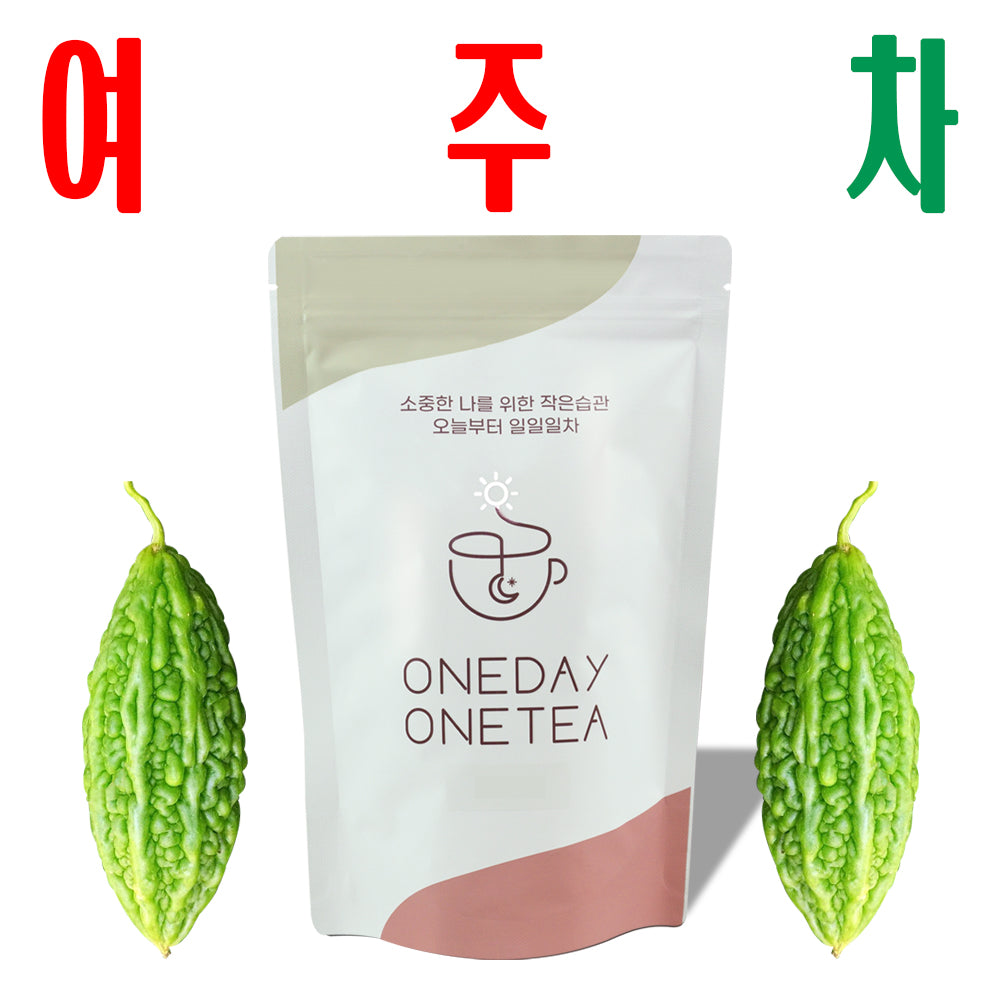
Bitter Melon Tea / Bitter Melon Tea Bags / Bitter Melon Tea Bags (30 count)
Bitter Melon Tea / Bitter Melon Tea Bags / Bitter Melon Tea Bags (30 count)
Bitter Melon
Bitter Melon Tea/Bitter Melon Tea Bag/Bitter Melon Tea Bag

|
||||||||||||
What is bitter melon tea?Bitter melon tea is a disposable tea bag made from dried, immature bitter melon fruit with the seeds removed. By placing a tea bag in hot water and letting it steep for just 1-2 minutes, you can fully enjoy the unique taste and aroma of bitter melon. While bitter melon tea has a mild bitter taste, it is complemented by a savory flavor and aroma, and you can enjoy the deep taste of bitter melon by drinking it cold. Here is a brief introduction to the bitter melon used as the ingredient for this tea. Bitter MelonBitter melon is a plant that even those who grew up in the countryside during their childhood remember seeing on house fences. Although bitter melon is distributed throughout Korea, it is not a common sight. Because the long, luffa- or cucumber-like fruit has many bumpy protrusions on its body, it brings to mind the demon's club found in fairy tales. When the plump, round bitter melon ripens, it can also resemble a golden toad. In plant taxonomy, bitter melon is in the same family(Cucurbitaceae) as luffa and cucumber, making them relatively close relatives. However, unlike luffa or cucumber, bitter melon is infamous for its bitter taste. Nevertheless, because the bitterness is reduced when bitter melon is pickled in salt or soaked in saltwater, we can enjoy it as a vegetable as much as we like. Bitter melon is an annual plant that disappears after one year, leaving its seeds behind. Bitter melon keeps its bitterness in its stems, leaves, and fruit to keep predators away, and once the fruit is fully ripe, it splits open on its own to drop its seeds into the ground. This unsociable bitterness is a self-protection mechanism to safeguard the plant from herbivores. As the bitter melon fruit ages, the bitterness becomes stronger, making it difficult to use as a vegetable without reducing the bitter taste. Although notorious for its bitterness, bitter melon is widely used in salads, fresh juices, pickles, seasoned dishes, stir-fries, roasts, stuffed dishes, and cold soups, and is also used as an ingredient in carbonated drinks, tea, pills, and extracts. The reason bitter melon, despite its strong bitterness, is popular as a vegetable is that many people are aficionados of the bitter taste, and the method to reduce the bitterness is simple. Ironically, the reason people widely use the fruit, stems, tendrils, roots, and leaves of the bitter melon is precisely because of this bitter taste. Origin of the name 'Bitter Melon' (Yeoju)Bitter melon is a plant that naturalized from abroad and grows on our land. It must have first been introduced to our land by human hands. In our neighboring country of China, it is called "Go-gwa"(苦瓜), meaning "bitter cucumber," using the characters for bitter(苦) and cucumber(瓜). It is also called Man-yeoji(蔓荔枝), meaning "vine litchi," and Geum-yeoji(錦荔枝), meaning "silk litchi," because of its skin. Japan also uses the same Chinese characters, Go-gwa(苦瓜) and Man-yeoji(蔓荔枝). In Korea, bitter melon is called by different names in different regions, such as Yeoja, Yeoji, Yuja (in North Korea), and Yoju. Shown in the lower left of the photo below is the fruit called Yeoji(Litchi). As indicated by its name in the Dongui Bogam from the Joseon Dynasty, Yeoji is a plant that has been growing on our land since the Goryeo Dynasty. Comparing the round-shaped Yeoji and the long-shaped bitter melon (Yeoju), they do not look very similar. However, when Yeoji and bitter melon are young, their size and appearance are very similar. Therefore, it is thought that the name Yeoju originated from the appearance of the bitter melon when it is young. |
||||||||||||

|
||||||||||||
Appearance of Bitter MelonThe appearance of bitter melon varies; as you can see in the picture above, there are long ones, plump ones, and ones with large or small bumpy protrusions. As the fruit ripens, it turns yellow or gold, and the fruit naturally splits open, causing the seeds to come out and fall to the ground. When bitter melon was introduced to KoreaBitter melon is very famous as a multi-purpose vegetable in India, Southeast Asia, southern China, Africa, and Central and South America. Although there is some debate, the origin of bitter melon is known to be the Kerala region in southwestern India. It is unclear when and by what route bitter melon left India and entered Korea. It is currently only presumed that it took root in our land during the Japanese colonial period. Why bitter melon is famousThe reason bitter melon is famous is precisely because of its bitter taste. Human senses are relative; if you taste something bitter first and then immediately taste something sweet, the sweetness will feel very strong, even if it is actually mild. When you feel bitterness in your life, realize that the bitterness is a source of great pleasure, and there is no need to despair at your current life that is experiencing bitterness. There is one more reason why bitter melon is famous besides its bitterness: the charantin and polypeptide-p contained in it are receiving the attention of scientists. Nutritional components of bitter melonBelow is a general component table of bitter melon fruit published by the USDA. Most of the cooked bitter melon fruit is water. Excluding water, we have looked at the content ratio of the remaining general components. |
||||||||||||
|
||||||||||||
|
Since bitter melon fruit is mostly water, it doesn't have much nutritional value regarding energy. The general components of bitter melon are relatively evenly distributed rather than being excessively skewed in one direction. Here are a few important, special, and trace components of bitter melon.
How to remove bitter melon bitternessIf you want to use bitter melon as a vegetable like a cucumber by reducing its bitterness, you can pickle it in salt, soak it in saltwater, or blanch it in saltwater. The method is very simple. Because reducing the bitterness creates a refreshing taste when added to various foods or carbonated water, bitter melon is widely used in food and drinks in India, Southeast Asia, South Asia, Central and South America, East Africa, and southern China. |
| 1). | The ingredient for bitter melon tea is supplied by the Korea Herbal Medicine Association. |
| 2). | It is a pure tea with no additives, meaning it has no preservatives, no artificial coloring, and no artificial flavoring. |
| 3). | The tea bag containing the tea particles is an eco-friendly fiber that is biodegradable and can be recycled as compost. |
| 4). | The tea bag containing the tea particles has received European certification as harmless food-contact material. |
| 5). | The tea bag has a long handle string so it can be steeped in a bottle or tumbler. |
| 6). | The packaging is an aluminum zipper bag, which is resistant to moisture, preserving the taste and aroma for a long time. |
| 7). | The tea has a mild bitter taste but also a savory flavor and aroma, making it pleasant to drink. |
| Introduction |
The product supplier is Onudam (CEO: Yoon Sung-hyun, Jo Su-in), and the manufacturer is Hapcheon Herb Processing Farming Association Corp. (CEO: Baek Mun-gi). CEO Baek, who managed a health crop farm for over 20 years with his parents, established the Hapcheon Herb Processing Farming Association in 1996, built a processing plant the following year, first received the $500,000 Export Tower award in 2003, and served as the 17th and 18th president of the Korea Herbal Medicine Association. Hapcheon Herb Processing Farming Association cultivates about 60 types of health-promoting plants in Hapcheon-eup, Hapcheon-gun, where the association is located, including chrysanthemum, hydrangea, mulberry, persimmon, peony, achyranthes, safflower, motherwort, schisandra, matrimony vine, cornus fruit, astragalus, green tea, tara vine, and bellflower, using them as raw materials for health teas. The association sells its products through domestic and international sales channels and also supplies products to other companies through OEM manufacturing. Hapcheon Herb Processing Farming Association received the Minister of Agriculture and Forestry Award in 2002, registered the trademark 'Sangrime' in 2007, obtained the international food safety standard ISO22000 certification in 2015, registered as a venture company in the same year, registered a patent for the bellflower tea manufacturing method in 2017, received the Ministry of Food and Drug Safety HACCP certification (No. 2018-2-9156) in 2018, and obtained organic certification (No. 17100199) for chrysanthemum crops in 2019, solidifying its reputation as a strong small business (hidden champion). A brief introduction to the Hapcheon Herb Processing Farming Association is provided below. |
|---|---|
| Name | Hapcheon Herb Processing Farming Association Corp. (CEO: Baek Mun-gi) |
| Address | 16, Naegok-gil, Hapcheon-eup, Hapcheon-gun, Gyeongsangnam-do |

|
|
| 010-3352-7949 |
| 1). | Place the tea bag in hot water and let it steep for 2-3 minutes before drinking. |
| 2). | It is highly recommended to make a habit of enjoying bitter melon tea after meals. |
| 3). | Although it tastes bitter, you can enjoy the deep, unique flavor of bitter melon by drinking it cold. |
| 4). | Store in a cool, dry place away from direct sunlight. |
| Ingredients | Bitter melon |
|---|---|
| Country of Origin | Republic of Korea |
| Nutrient Content | 100% immature bitter melon fruit (seedless) |
| Nutritional Info | Not legally applicable |
| Sales Unit | Bag (contains 30 tea bags inside a polyethylene bag) |
|---|---|
| Total Content | 30g (1g x 30 tea bags) |
| Consumption Period | It is difficult to estimate the consumption period for one bag as it depends on individual usage. |
| Packaging Material | Tea bag: Biodegradable fiber Plastic bag: Polyethylene |
| Package Size | Width 15cm x Height 23cm x Thickness 6.5cm |
| Food Type | Tea (Single-ingredient infusion tea) |
|---|---|
| Manufacturing Date | Manufacturing date cannot be determined as items are shipped from the supplier's cold storage; for verification, call: 02-967-8133 |
| Expiration Date | Marked on the package. Items with less than 1 month left before the expiration date as of the shipment date will not be sent. For verification, call: 02-967-8133 |
| Not legally applicable. |
| Not legally applicable. |
| Not legally applicable. |
| Payment Info |
1). For bank transfers, payment can be made via PC banking, internet banking, phone banking, or at a bank. - The name of the depositor must match the name entered during the order, and orders not paid within 3 days will be automatically canceled. 2). For credit card or simple payments, the payment system processes the transaction immediately, so no additional steps are required. |
|---|---|
| Shipping Info |
1). Delivery method: Courier service 2). Delivery area: Nationwide 3). Delivery fee: Generally free, though some items may incur fees. 4). Delivery time: 1 to 3 days: - Orders placed before 3 PM will arrive the next day; orders after 3 PM will arrive the day after next. 5). Notes:- Additional shipping fees may apply to island regions. - For bank transfers, delivery begins after payment is confirmed. - Deliveries may be slightly delayed during holidays or due to special circumstances at the courier company. |
| Exchanges/Returns |
1). Possible reasons for exchange/return: - You may exchange or return items within 7 days of receipt. - If the received product differs from the product description/advertisement, within 3 months of receipt or 30 days from when the fact was identified. 2). Reasons for denying exchange/return (based on the Consumer Protection Act in E-Commerce):- If the product is lost or damaged due to the customer's fault (excluding cases where the packaging was opened to check the product contents). - If the packaging is opened or damaged, resulting in the loss of product value. - If the product value has significantly decreased due to the customer's use or partial consumption. - If the product value has significantly decreased over time, making resale difficult. - If packaging of easily reproducible products has been damaged. 3). Warranty conditions and quality assurance standards follow the "Framework Act on Consumers."4). Notes: - You must cover the shipping costs if exchanging or returning an item due to a change of heart. |
| Damage Compensation/ Complaints/Dispute Resolution Standards |
Korea Fair Trade Commission's Consumer Dispute Resolution Standards |
| Terms and Conditions | Terms of Service (https://bit.ly/3qDTO1Q) |
Shipping Cost
Shipping Cost
1. Free Shipping [some exclusions]
2. Free shipping on orders over ₩30,000
Shipping Location
Shipping Location
Shipped from manufacturers located throughout South Korea
Shipping Policy
Shipping Policy
1. Immediate reshipment if the product is lost after dispatch
2. Immediate exchange if the received product is damaged
3. Same-day dispatch (before 12 PM) for next-day receipt
Delivery Company
Delivery Company
CJ Logistics, Logen Express, Korea Post EMS, Lotte Express, etc.
Delivery Scheduled
Delivery Scheduled
1. Purchases made before 12 PM will be received the next day.
2. Purchases made before 2 PM will be received the next day [certain items].
3. Purchases made after 12 PM/2 PM will be received two days later.
Return Policy
Return Policy
1. Returns accepted within 7 days of product receipt
2. Returns accepted within 3 months for products that differ from advertised description
3. Returns accepted within 30 days from the date the discrepancy was discovered
4. Live products are final sale and non-returnable
5. For simple returns, buyer is responsible for round-trip shipping costs
6. For returns due to seller's fault, round-trip shipping is free
Security Policy
Security Policy
Secure payments are made through world-renowned payment companies such as PayPal, Visa, and Mastercard. Your payment information will not be shared with any third parties.
Privacy Policy
Privacy Policy
Your personal information collected for payment and delivery will be securely protected during delivery and discarded after delivery is complete.