Shipping Cost
Shipping Cost
1. Free Shipping [some exclusions]
2. Free shipping on orders over ₩30,000
Shipping Location
Shipping Location
Shipped from manufacturers located throughout South Korea
Shipping Policy
Shipping Policy
1. Immediate reshipment if the product is lost after dispatch
2. Immediate exchange if the received product is damaged
3. Same-day dispatch (before 12 PM) for next-day receipt
Delivery Company
Delivery Company
CJ Logistics, Logen Express, Korea Post EMS, Lotte Express, etc.
Delivery Scheduled
Delivery Scheduled
1. Purchases made before 12 PM will be received the next day.
2. Purchases made before 2 PM will be received the next day [certain items].
3. Purchases made after 12 PM/2 PM will be received two days later.
Return Policy
Return Policy
1. Returns accepted within 7 days of product receipt
2. Returns accepted within 3 months for products that differ from advertised description
3. Returns accepted within 30 days from the date the discrepancy was discovered
4. Live products are final sale and non-returnable
5. For simple returns, buyer is responsible for round-trip shipping costs
6. For returns due to seller's fault, round-trip shipping is free
Security Policy
Security Policy
Secure payments are made through world-renowned payment companies such as PayPal, Visa, and Mastercard. Your payment information will not be shared with any third parties.
Privacy Policy
Privacy Policy
Your personal information collected for payment and delivery will be securely protected during delivery and discarded after delivery is complete.
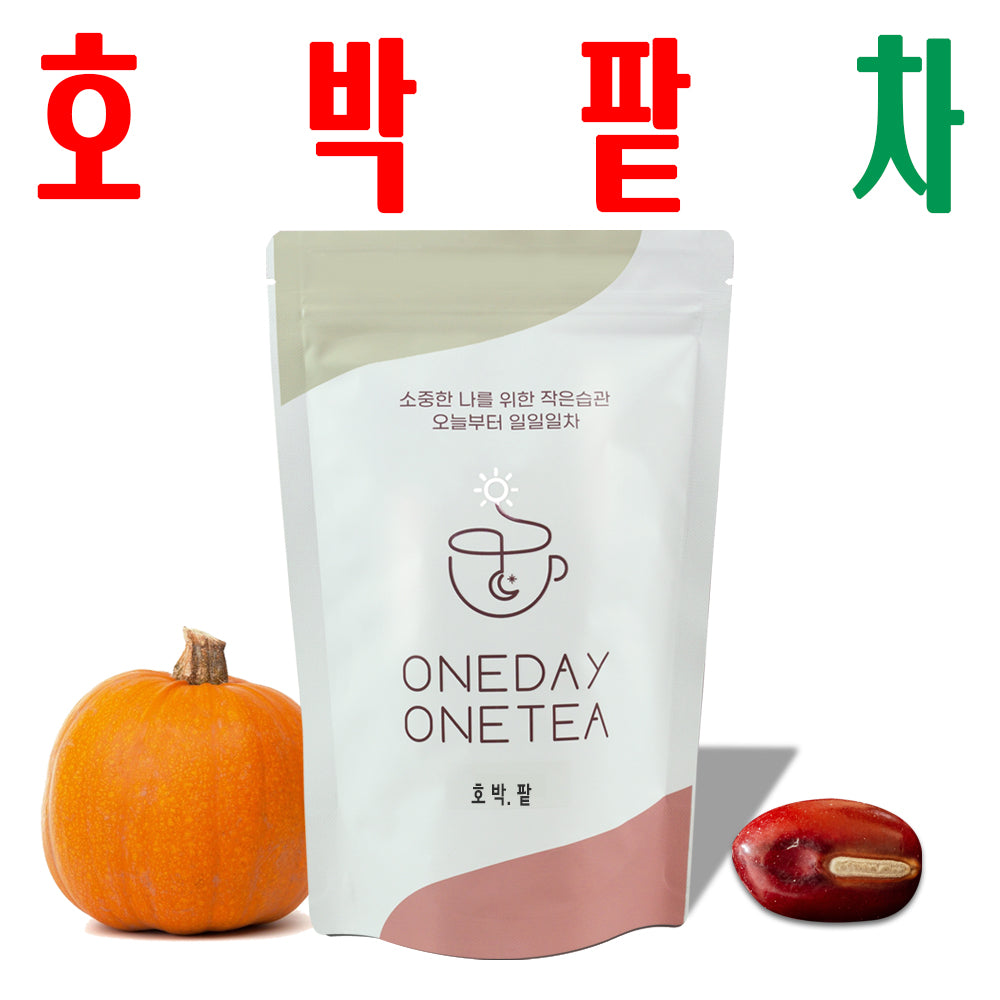
Pumpkin Red Bean Tea / Pumpkin Tea / Pumpkin Red Bean Tea Bags (30 count)
Pumpkin Red Bean Tea / Pumpkin Tea / Pumpkin Red Bean Tea Bags (30 count)
Pumpkin/Adzuki Bean
Pumpkin Tea/Pumpkin Adzuki Bean Tea/Adzuki Bean Tea
 |
||||||||||||||||||||||||||
What is Pumpkin Adzuki Bean Tea?Pumpkin Adzuki Bean Tea is a disposable tea bag made from dried pumpkin, adzuki beans, and burdock. Simply steep a tea bag in hot water for 1-2 minutes to fully enjoy the excellent taste and aroma created by the combination of pumpkin, adzuki beans, and burdock. Because it tastes so good, Pumpkin Adzuki Bean Tea can be enjoyed both as a health tea and as a casual beverage. Below is a brief introduction to pumpkin, the main ingredient of this tea. PumpkinTo us living in the modern era, pumpkin feels as familiar as if it had been in our land since the dawn of time. However, in reality, it has only been about 400 years since pumpkins first took root in our soil. It was only 500 years ago that pumpkins, which were familiar to Indigenous peoples of the Americas 10,000 years ago, emerged from their place of origin, the American continent. Following Columbus's arrival in the Americas in 1492, pumpkins were introduced to Europe by the Portuguese, and about 100 years later, they began to grow in our land. The skin of an old pumpkin (aged pumpkin) is yellow, while the skin of a sweet pumpkin (kabocha) is green. However, the reason pumpkins are called a yellow food is because their flesh is yellow. Below is a picture of pumpkin flesh. |
||||||||||||||||||||||||||
 |
||||||||||||||||||||||||||
|
Pumpkin belongs to the genus Cucurbita, which contains between 13 and 30 species. Depending on the scholar, the number of species is variable, and pumpkins show great diversity in appearance and ecology based on size, color, shape, lifespan, vine characteristics, and cold hardiness. Pumpkin varieties are broadly classified into 5 categories: Oriental, Occidental, Pepo, Mixta, and Ficifolia. The photo below shows representatives of the five species found around the world, and the Oriental pumpkin on the far left is one of the 'aged pumpkins' you can see in fields in Korea. 'Aged pumpkin' (neulgeun-hobak) is not a single variety name, but a Korean classification term meaning a pumpkin used when it is fully ripe. It was distinguished from the unripe 'summer squash' (ae-hobak), but nowadays it has become a proper noun and is used as if it were a specific variety name. |
||||||||||||||||||||||||||
 |
||||||||||||||||||||||||||
|
The pumpkin called sweet pumpkin (kabocha) is a type of Occidental pumpkin, which is the second one in the photo above. Sweet pumpkins do not turn yellow even when fully ripe, generally maintaining a green color; while they are smaller than the Oriental 'aged pumpkins', they are, as the name suggests, very sweet. A small type of sweet pumpkin with a chestnut-like flavor in its skin is called a chestnut pumpkin or mini sweet pumpkin. Because sweet pumpkins were introduced to the Korean Peninsula from Japan during the colonial period, they were referred to as wae-hobak (Japanese pumpkin) and were avoided by Koreans. However, as cultivation for export to Japan began in the 1980s, their cultivation spread nationwide, and they are now actively grown. The etymology of the name 'hobak' remains unclear, but it is presumed to mean 'barbarian gourd.' In China and Japan, pumpkins were called nangua (southern melon), and in the early days of their introduction to the Joseon Dynasty, they were also called nangua. Later, they were also referred to as hugua (barbarian melon) or seungso (monk's vegetable). Hugua meant a melon introduced from the 'barbarians,' and seungso meant a vegetable eaten by Buddhist monks, as pumpkins were enjoyed in temples when they were first introduced. Pumpkins were introduced to Japan in 1541 and to China before 1578. While it is unclear how and when they entered the Korean Peninsula, it is estimated to have been shortly after the Imjin War (1592-1598) or around 1605. It took about 100 years for the pumpkin to travel from the Americas, through Europe, to the Korean Peninsula. Their usefulness spread rapidly among the public, evidenced by their appearance in the Chinese Bencao Gangmu in the 16th century and in the Korean Dongui Bogam 100 years later in the 17th century. Today, pumpkins are used for various purposes including food, beverages, oils, detergents, animal feed, ornamentation, decoration, and medicine, and all parts of the plant—including shoots, tendrils, flowers, leaves, stems, stalks, fruit, seeds, and roots—are used in traditional practices for health. Pumpkin ComponentsBelow is the analysis of pumpkin components published by the Rural Development Administration. 'Dry weight basis' means the content ratio was calculated excluding moisture. |
||||||||||||||||||||||||||
|
||||||||||||||||||||||||||
|
Trace elements in boiled pumpkin (per 100g) |
||||||||||||||||||||||||||
|
||||||||||||||||||||||||||
|
Pumpkins are rich in carbohydrates and protein. Below are some important, specific, and trace components of pumpkin.
Traditional Uses of PumpkinBelow is a brief introduction to how pumpkins have been used in various traditional practices, both at home and abroad.
|
||||||||||||||||||||||||||
| 1). | The raw materials for the tea—pumpkin, red bean, and burdock—are supplied by the Korea Medicinal Herb Association. |
| 2). | This is a pure tea with no additives, as it contains no preservatives, artificial colors, or artificial flavors. |
| 3). | The tea bag containing the tea particles is made of biodegradable, eco-friendly fiber that can be recycled as compost. |
| 4). | The tea bag containing the tea particles has received European certification as a food-contact material harmless to the human body. |
| 5). | The tea bag string has been made long enough to allow brewing in bottles or tumblers. |
| 6). | The packaging is an aluminum zipper bag, which is resistant to moisture, helping to preserve the taste and aroma for a long time. |
| 7). | The taste of the pumpkin & red bean tea is sweet and savory, with an excellent savory aroma. |
| Intro |
The product supplier is Onyudam (CEOs: Yoon Sung-hyun, Jo Su-in), and the manufacturer is Hapcheon Medicinal Herb Processing Farming Association Corp. (CEO: Baek Moon-ki). CEO Baek, while running a healthy crop farm with his parents for over 20 years, established the Hapcheon Medicinal Herb Processing Farming Association Corp. in 1996, set up a processing plant the following year, received the $500,000 Export Tower award for the first time in 2003, and served as the 17th and 18th chairman of the Korea Medicinal Herb Association. Hapcheon Medicinal Herb Processing Farming Association Corp. cultivates and uses over 60 types of healthy plants, including chrysanthemum, hydrangea, mulberry, persimmon, peony, achyranthes, safflower, motherwort, schisandra, matrimony vine, cornus, milk vetch root, green tea, tara vine, and bellflower, as raw materials for health teas in Hapcheon-eup, Hapcheon-gun, where the association is located. The association sells its products through domestic and international channels and also supplies products to other companies through OEM manufacturing. The Hapcheon Medicinal Herb Processing Farming Association Corp. received the Minister of Agriculture and Forestry Award in 2002, registered the 'Sangrime' trademark in 2007, received the international food safety standard certification ISO22000 in 2015, was registered as a venture company in the same year, patented a bellflower tea manufacturing method in 2017, received the Ministry of Food and Drug Safety HACCP certification (No. 2018-2-9156) in 2018, and received organic certification for chrysanthemum crops (No. 17100199) in 2019, solidifying its status as a strong small business. A brief introduction to the Hapcheon Medicinal Herb Processing Farming Association Corp. is provided below. |
|---|---|
| Name | Hapcheon Medicinal Herb Processing Farming Association Corp. (CEO: Baek Moon-ki) |
| Address | 16, Naegok-gil, Hapcheon-eup, Hapcheon-gun, Gyeongsangnam-do |
 |
|
| 010-3352-7949 |
| 1). | Place the tea bag in hot water and steep for 2-3 minutes before drinking. |
| 2). | You can enjoy the tea at any time, regardless of meals, but it is better to drink it on an empty stomach. |
| 3). | You can drink pumpkin & red bean tea either hot or cold, but it is better when enjoyed warm. |
| 4). | Store in a cool place, away from direct sunlight. |
| Ingredients | Pumpkin, Red bean, Burdock |
|---|---|
| Origin | South Korea |
| Composition | Pumpkin 80%, Red bean 10%, Burdock 10% |
| Nutritional Info | Not applicable by law |
| Sales Unit | Bag (contains 30 tea bags inside a polyethylene pouch) |
|---|---|
| Total Weight | 60g (2g x 30 tea bags) |
| Consumption Period | It is difficult to estimate the consumption period for one bag as it depends on individual usage. |
| Packaging Material | Tea bag: Biodegradable fiber Plastic bag: Polyethylene |
| Package Size | 15cm (width) x 23cm (length) x 6.5cm (thickness) |
| Food Type | Tea (Compound Leached Tea) |
|---|---|
| Manufacturing Date | Cannot determine the manufacturing date as products are shipped from the supplier's refrigerated warehouse; call for confirmation: 02-967-8133 |
| Expiration Date | Indicated on the packaging; products with less than 1 month left until expiration from the shipping date will not be sent; call for confirmation: 02-967-8133 |
| Not applicable by law. |
| Not legally applicable. |
| Not legally applicable. |
| Payment Information | 1). For bank transfer payments, the purchase amount can be deposited via PC banking, internet banking, phone banking, or at a bank. - The depositor name entered during order placement must match the actual sender's name; orders not paid within 3 days are automatically canceled. 2). For credit card or simple payments, the system processes the payment immediately, so no further action is required. |
|---|---|
| Shipping Information | 1). Shipping Method: Courier service 2). Shipping Area: Nationwide 3). Shipping Fee: Generally free, but some charges may apply 4). Shipping Time: 1–3 days: - Orders paid before 3:00 PM arrive the next day; orders paid after 3:00 PM arrive the day after next. 5). Notes:- Island regions may require additional shipping fees. - For bank transfers, shipping occurs after your payment is confirmed. - Delivery may be delayed during holidays or due to special circumstances at the courier company. |
| Exchanges and Returns | 1). Eligible for exchange/return: - Exchanges/returns are possible within 7 days of receiving the product. - If the product received differs from the description or advertising, within 3 months of receipt or 30 days of becoming aware of the fact. 2). Ineligible for exchange/return (based on "Electronic Commerce Act" withdrawal restrictions):- If the product is lost or damaged due to user fault (excluding cases where packaging is opened to verify product contents). - If packaging is opened or damaged, resulting in loss of product value. - If the product value has significantly decreased due to the customer's use or partial consumption. - If the product value has significantly decreased over time, making resale difficult. - If packaging of reproducible products is damaged. 3). Warranties and quality assurance standards follow the "Framework Act on Consumers."4). Notes: - Customers are responsible for shipping costs for exchanges or returns due to change of mind. |
| Damage Compensation / Complaints / Dispute Resolution Standards |
KFTC Consumer Dispute Resolution Standards |
| Terms of Use | Terms of Service (https://bit.ly/3qDTO1Q) |
Shipping Cost
Shipping Cost
1. Free Shipping [some exclusions]
2. Free shipping on orders over ₩30,000
Shipping Location
Shipping Location
Shipped from manufacturers located throughout South Korea
Shipping Policy
Shipping Policy
1. Immediate reshipment if the product is lost after dispatch
2. Immediate exchange if the received product is damaged
3. Same-day dispatch (before 12 PM) for next-day receipt
Delivery Company
Delivery Company
CJ Logistics, Logen Express, Korea Post EMS, Lotte Express, etc.
Delivery Scheduled
Delivery Scheduled
1. Purchases made before 12 PM will be received the next day.
2. Purchases made before 2 PM will be received the next day [certain items].
3. Purchases made after 12 PM/2 PM will be received two days later.
Return Policy
Return Policy
1. Returns accepted within 7 days of product receipt
2. Returns accepted within 3 months for products that differ from advertised description
3. Returns accepted within 30 days from the date the discrepancy was discovered
4. Live products are final sale and non-returnable
5. For simple returns, buyer is responsible for round-trip shipping costs
6. For returns due to seller's fault, round-trip shipping is free
Security Policy
Security Policy
Secure payments are made through world-renowned payment companies such as PayPal, Visa, and Mastercard. Your payment information will not be shared with any third parties.
Privacy Policy
Privacy Policy
Your personal information collected for payment and delivery will be securely protected during delivery and discarded after delivery is complete.