Shipping Cost
Shipping Cost
1. Free Shipping [some exclusions]
2. Free shipping on orders over ₩30,000
Shipping Location
Shipping Location
Shipped from manufacturers located throughout South Korea
Shipping Policy
Shipping Policy
1. Immediate reshipment if the product is lost after dispatch
2. Immediate exchange if the received product is damaged
3. Same-day dispatch (before 12 PM) for next-day receipt
Delivery Company
Delivery Company
CJ Logistics, Logen Express, Korea Post EMS, Lotte Express, etc.
Delivery Scheduled
Delivery Scheduled
1. Purchases made before 12 PM will be received the next day.
2. Purchases made before 2 PM will be received the next day [certain items].
3. Purchases made after 12 PM/2 PM will be received two days later.
Return Policy
Return Policy
1. Returns accepted within 7 days of product receipt
2. Returns accepted within 3 months for products that differ from advertised description
3. Returns accepted within 30 days from the date the discrepancy was discovered
4. Live products are final sale and non-returnable
5. For simple returns, buyer is responsible for round-trip shipping costs
6. For returns due to seller's fault, round-trip shipping is free
Security Policy
Security Policy
Secure payments are made through world-renowned payment companies such as PayPal, Visa, and Mastercard. Your payment information will not be shared with any third parties.
Privacy Policy
Privacy Policy
Your personal information collected for payment and delivery will be securely protected during delivery and discarded after delivery is complete.
Rooibos Tea / Rooibos Tea Bag / Rooibos Tea Bag 30 Teabags
Rooibos Tea / Rooibos Tea Bag / Rooibos Tea Bag 30 Teabags
Rooibos
Rooibos Tea/Rooibos Tea Bag/Rooibos Tea Bag Tea

|
||||||||||||||||||
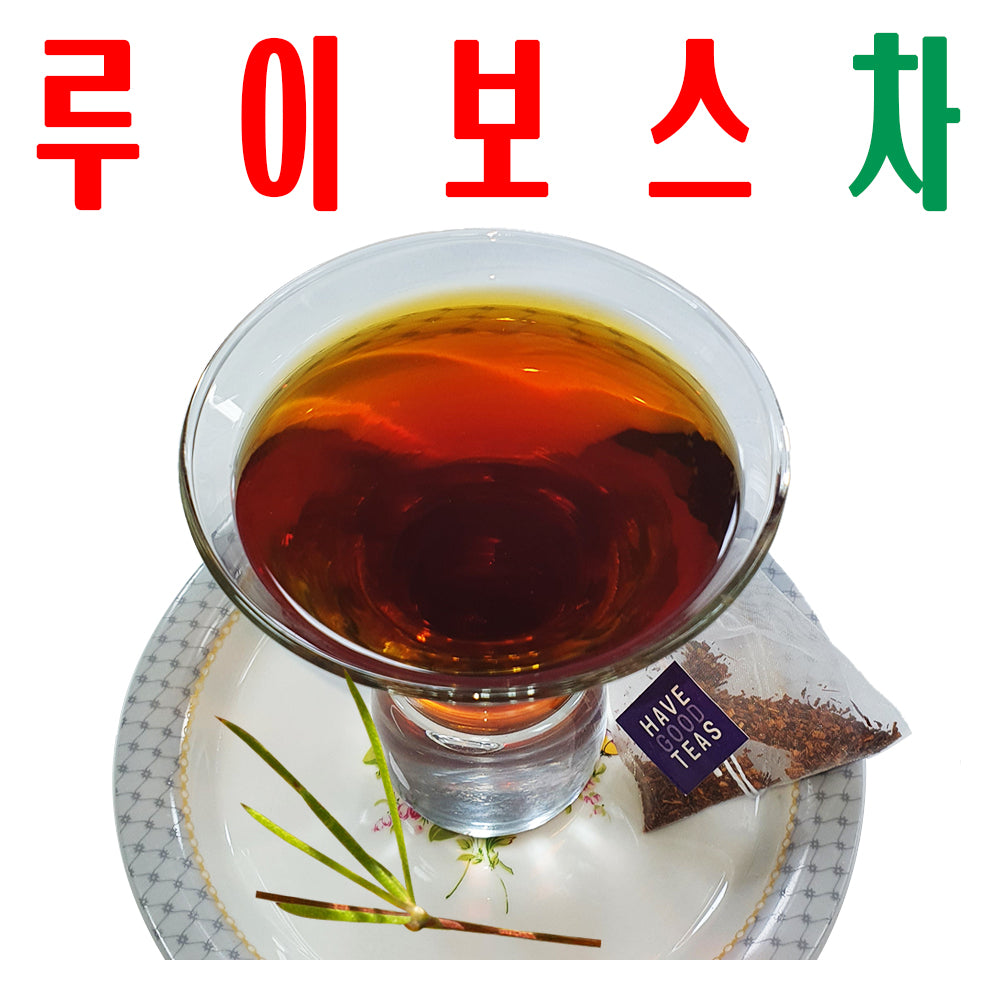
What is Rooibos tea?Rooibos is the name of a tree that grows in Africa. Rooibos tea is a tea bag product made by importing fermented rooibos, removing impurities and off-flavors, and grinding it to ensure the nutrients are well-extracted into water. It is a healthy herbal tea that allows you to enjoy the benefits of rooibos by steeping it in hot water for just a few minutes. The tea has a slightly cooling taste and aroma, and the tea liquor has a captivating red color. Rooibos tea is often perceived as having a deeper flavor and aroma when served cold rather than hot. Since rooibos contains no caffeine, it is a tea suitable for pregnant women and children alike. Here is a brief introduction to rooibos, the raw material for the tea. RooibosIn the southwestern part of the Republic of South Africa (abbreviation: South Africa), there is the Cederberg Mountain Range. The Khoisan people have lived at the foothills of the Cederberg Mountains since ancient times. During the colonial era, the Dutch who entered the Khoisan territory married indigenous people, resulting in mixed-race descendants. These descendants have lived alongside the indigenous people for generations and are known in South Africa as Boers. The name "Rooibos" originates from the Afrikaans language used by the Boers; literally translated into Korean, it means 'red bush tree'. 'Rooi' means 'red' and 'Bos' means 'bush tree'. Botanically, rooibos is a coniferous shrub belonging to the legume family and the genus Aspalathus. The genus Aspalathus includes over 270 species of trees, almost all of which are native to South Africa. Among these 270+ species, rooibos is the most famous. Its Korean botanical name is 'Ganeun-deungpul'. Both wild and cultivated rooibos are used in the production of rooibos tea. There are many similar rooibos species in the wild, and sometimes teas made from these alternatives are traded as rooibos tea. Therefore, the South African government has established legal regulations stating that 'Rooibos tea must be manufactured exclusively from rooibos'. The European Union (EU) has 'Protected Designation of Origin' regulations that recognize only rooibos grown in the Cederberg Mountains of South Africa as the raw material for rooibos tea. The photo below shows rooibos branches, the raw material for rooibos tea. The branches are red, and the leaves are thin with pointed tips. |
||||||||||||||||||
|
||||||||||||||||||
|
Rooibos tea is made from branches and leaves harvested just before blooming. The rooibos branches are cut into pieces of about 5mm, crushed by machine, moistened with water, and then sealed. The sealed raw material is fermented at 30-50°C for 8-24 hours and dried for 1-3 days to complete the tea. This process is similar to the production process of Chinese Pu-erh tea. During the tea manufacturing process, polyphenols are oxidized to produce yellowish theaflavins and reddish thearubigins, which give the tea liquor a reddish-brown color similar to Pu-erh tea. Because the tea liquor is red, it is called Red Tea in English-speaking countries. Below are the fermented tea leaves. |
||||||||||||||||||
|
||||||||||||||||||
History of Rooibos TeaRooibos is native to South Africa's Cederberg Mountains and is a regional specialty found nowhere else. The oldest record of rooibos is in the travel journals of the Swedish botanist Thunberg (1743-1828) in 1772, stating that 'the indigenous people drink rooibos'. While traces of rooibos use have been found dating back thousands of years, there are no records of rooibos prior to 1772. During the colonial era, Boers drank rooibos—which had been a health tonic for the indigenous people—steeped as a substitute for green and black tea. In 1904, entrepreneur Benjamin Ginsberg (1877-1944) first commercialized rooibos tea, and in the 1930s, physician Dr. Nortier (1885-1955) established cultivation techniques. Rooibos tea began to be exported in 1955, introducing it to the world outside South Africa. Types of Rooibos TeaRooibos tea is broadly divided into fermented tea and non-fermented tea; since 99% of production is fermented tea, "rooibos tea" effectively refers to the fermented variety. From its first release in 1904, only fermented rooibos tea was produced, but to suit the tastes of 21st-century wellness seekers, non-fermented tea began production in 2001. Non-fermented tea has a more astringent taste. Because non-fermented tea is more expensive to produce than the fermented variety, its production volume is lower. Rooibos Tea GradesThe quality grading of rooibos tea is determined in detail by the 'leaf-to-stem ratio', particle size, color, taste, and aroma. However, the mixing ratio of rooibos leaves and branches used as the raw material has the greatest impact on the tea's grade. The higher the proportion of rooibos leaves in the raw material, the higher the quality of the tea. This is because teas containing more leaves than stems produce a deeper liquor color, a richer flavor, and a more pleasant aftertaste. Rooibos Tea ApplicationsLike coffee, rooibos tea can be prepared as espresso, latte, or cappuccino styles, or enjoyed as milk tea or iced tea. It is often blended with flavors like cinnamon, orange, mint, or banana, or with ingredients like raspberry, hibiscus, and vanilla. Beyond tea, rooibos is used in a wide range of applications, including beverages, foods, functional health products, soaps, toothpaste, and cosmetics. Why Rooibos Tea Became FamousThe first reason for rooibos tea's fame is that it is a caffeine-free herbal tea. Rooibos tea can be enjoyed by people who are sensitive to caffeine, including pregnant women and children. The second reason is that it was used as a substitute for black tea. When rooibos tea was first launched in South Africa, black tea was available on the market but was prohibitively expensive, so rooibos tea gained popularity as a black tea substitute. Subsequently, as it was exported to Europe, rooibos tea achieved global renown. The biggest factor that made rooibos tea famous is the global wellness trend. The abundance of aspalathin and nothofagin in rooibos caught the attention of wellness enthusiasts, leading to a surge in export volume starting in the early 1990s. Approximately 70-80% of rooibos tea is consumed in Europe, with Germany accounting for 40-50%. As of 2010, rooibos tea was consumed in 37 countries, including those in Europe, the US, and Japan. Barely 60 years after leaving South Africa, rooibos tea is now evaluated as a tea on par with world-famous black and Pu-erh teas. Another reason for rooibos tea's fame is the experience of South African Annekie Theron (1929-2016). In 1968, Theron mixed rooibos tea into the milk for her nursing infant and observed that the child's health issues were immediately resolved. As this became known in South Africa, a trend swept the country of mixing rooibos tea into infant formula. Consequently, in 1971, Theron started a business creating cosmetics with rooibos extracts. The massive success of this business further propelled the name "rooibos" to global fame. Rooibos ComponentsBased on research data from universities and government research institutions in the Republic of South Africa, here is a brief introduction to some of the major, special, and trace components in rooibos.
|


| 1). | The fermented rooibos used as the raw material is supplied by the Korea Herbal Medicine Association. |
| 2). | A pure tea with no additives—no preservatives, no artificial colors, and no artificial flavors. |
| 3). | The tea bags are made of eco-friendly, biodegradable fabric suitable for composting. |
| 4). | The tea bags have received European certification as food-contact materials safe for human health. |
| 5). | The tea bags come with long strings for convenience when steeping in bottles or tumblers. |
| 6). | The packaging is an aluminum zipper bag, making it highly resistant to moisture to preserve flavor and aroma for a long time. |
| 7). | The flavor is smooth with a slightly cooling and clean aftertaste, accompanied by a subtle mugwort aroma. |
| 8). | As a caffeine-free tea, it is suitable for children and pregnant women. |
| Introduction |
The product is supplied by Onyudam (CEO: Yoon Sung-hyun, Cho Soo-in) and manufactured by Hapcheon Herbal Medicine Processing Agricultural Association Corp. (CEO: Baek Moon-gi). CEO Baek, having run a health tonic farm with his parents for over 20 years, established the Hapcheon Herbal Medicine Processing Agricultural Association Corp. in 1996, set up a processing factory the following year, received the $500,000 Export Tower award in 2003, and served as the 17th-18th Chairman of the Korea Herbal Medicine Association. Hapcheon Herb Processing Farming Association cultivates over 60 types of health-promoting plants in Hapcheon-eup, Hapcheon-gun, where the association is located, including chrysanthemum, hydrangea, mulberry, persimmon, peony, achyranthes, safflower, motherwort, omija, boxthorn, cornelian cherry, milk vetch, green tea, actinidia, and balloon flower, using them as raw materials for health teas. The Hapcheon Herb Processing Farming Association sells its products through domestic and international sales channels and also supplies products to other companies through OEM manufacturing. The Hapcheon Herb Processing Farming Association received the Minister of Agriculture and Forestry Award in 2002, registered the trademark 'Sangrime' in 2007, was certified with the international food safety standard ISO22000 in 2015, and was registered as a venture company in the same year. It registered a patent for a balloon flower tea manufacturing method in 2017, received food safety management certification HACCP (No. 2018-2-9156) from the Ministry of Food and Drug Safety in 2018, and received organic certification (No. 17100199) for chrysanthemum crops in 2019, thereby establishing itself as a small but strong enterprise. A brief introduction to the Hapcheon Herb Processing Farming Association is provided below. |
|---|---|
| Name | Hapcheon Herb Processing Farming Association Co., Ltd. (Representative: Baek Mun-gi) |
| Address | 16 Naegok-gil, Hapcheon-eup, Hapcheon-gun, Gyeongnam |

|
|
| 010-3352-7949 |
| 1). | Place the tea bag in hot water and steep for 2-3 minutes before drinking. |
| 2). | You may enjoy the tea regardless of meals, but it is better to drink on an empty stomach. |
| 3). | A deeper flavor and aroma are felt when the tea has cooled, so please enjoy it as a cold tea. |
| 4). | Store in a cool place away from direct sunlight. |
| Ingredients | Rooibos |
|---|---|
| Origin | South Korea |
| Composition | 100% Rooibos from South Africa |
| Nutritional Info | Not legally applicable |
| Sales Unit | Bag (contains 30 tea bags inside a polyethylene bag) |
|---|---|
| Total Content | 30g (1g x 30 tea bags) |
| Consumption Period | It is difficult to estimate the consumption period for one bag as it depends on individual intake. |
| Packaging Material | Tea bag: Biodegradable fiber Plastic bag: Polyethylene |
| Packaging Size | Width 15cm x Height 23cm x Thickness 6.5cm |
| Food Type | Tea (Single-origin Infusion) |
|---|---|
| Manufacturing Date | Manufacturing date cannot be determined as products are shipped from the supplier's cold storage. For verification, please call: 02-967-8133 |
| Expiration Date | Indicated on the packaging. Products with less than 1 month of shelf life remaining from the shipping date are not sent. For verification, please call: 02-967-8133 |
| Not legally applicable. |
| Not legally applicable. |
| Not legally applicable. |
| Payment Information |
1). For bank transfer payments, please deposit the purchase amount via PC banking, internet banking, telephone banking, or at a bank. - The name of the depositor must match the name entered at the time of order; orders not paid within 3 days will be automatically cancelled. 2). For credit card or simple payments, the system processes payment immediately, so no further action is required. |
|---|---|
| Shipping Information |
1). Delivery Method: Courier service 2). Delivery Region: Nationwide 3). Shipping Costs: Generally free, though some items may have a fee 4). Delivery Period: 1-3 days: - Orders placed before 3 PM can be received the next day; orders after 3 PM will be received the day after next. 5). Notes:- Separate shipping costs may apply for island regions. - For bank transfer payments, shipping will occur after confirmation of your deposit. - Delivery may be delayed during holidays or due to special circumstances with the shipping company. |
| Exchanges & Returns |
1). Conditions for Exchange/Return
- Exchanges/returns are possible within 7 days of receiving the product. - If the received product differs from the information displayed/advertised: within 3 months of receipt, or within 30 days of discovering the discrepancy. 2). Conditions for No Exchange/Return (Limits on withdrawal as per the E-commerce Act)- If the product is lost/damaged due to the customer's fault. (Excluding damage caused solely to inspect the product) - If the packaging has been opened or damaged, losing its value. - If the value of the product has significantly decreased due to customer use or partial consumption. - If the product value has decreased to such an extent that resale is difficult over time. - If the packaging of a product that can be reproduced has been damaged. 3). Warranty terms and quality assurance standards follow the "Consumer Basic Act".4). Notes: - You are responsible for shipping costs for exchanges/returns due to change of mind. |
| Damage Compensation/ Complaint Handling |
Fair Trade Commission Consumer Dispute Resolution Standards |
| Terms of Service | Terms of Service (https://bit.ly/3qDTO1Q) |
Shipping Cost
Shipping Cost
1. Free Shipping [some exclusions]
2. Free shipping on orders over ₩30,000
Shipping Location
Shipping Location
Shipped from manufacturers located throughout South Korea
Shipping Policy
Shipping Policy
1. Immediate reshipment if the product is lost after dispatch
2. Immediate exchange if the received product is damaged
3. Same-day dispatch (before 12 PM) for next-day receipt
Delivery Company
Delivery Company
CJ Logistics, Logen Express, Korea Post EMS, Lotte Express, etc.
Delivery Scheduled
Delivery Scheduled
1. Purchases made before 12 PM will be received the next day.
2. Purchases made before 2 PM will be received the next day [certain items].
3. Purchases made after 12 PM/2 PM will be received two days later.
Return Policy
Return Policy
1. Returns accepted within 7 days of product receipt
2. Returns accepted within 3 months for products that differ from advertised description
3. Returns accepted within 30 days from the date the discrepancy was discovered
4. Live products are final sale and non-returnable
5. For simple returns, buyer is responsible for round-trip shipping costs
6. For returns due to seller's fault, round-trip shipping is free
Security Policy
Security Policy
Secure payments are made through world-renowned payment companies such as PayPal, Visa, and Mastercard. Your payment information will not be shared with any third parties.
Privacy Policy
Privacy Policy
Your personal information collected for payment and delivery will be securely protected during delivery and discarded after delivery is complete.