Shipping Cost
Shipping Cost
1. Free Shipping [some exclusions]
2. Free shipping on orders over ₩30,000
Shipping Location
Shipping Location
Shipped from manufacturers located throughout South Korea
Shipping Policy
Shipping Policy
1. Immediate reshipment if the product is lost after dispatch
2. Immediate exchange if the received product is damaged
3. Same-day dispatch (before 12 PM) for next-day receipt
Delivery Company
Delivery Company
CJ Logistics, Logen Express, Korea Post EMS, Lotte Express, etc.
Delivery Scheduled
Delivery Scheduled
1. Purchases made before 12 PM will be received the next day.
2. Purchases made before 2 PM will be received the next day [certain items].
3. Purchases made after 12 PM/2 PM will be received two days later.
Return Policy
Return Policy
1. Returns accepted within 7 days of product receipt
2. Returns accepted within 3 months for products that differ from advertised description
3. Returns accepted within 30 days from the date the discrepancy was discovered
4. Live products are final sale and non-returnable
5. For simple returns, buyer is responsible for round-trip shipping costs
6. For returns due to seller's fault, round-trip shipping is free
Security Policy
Security Policy
Secure payments are made through world-renowned payment companies such as PayPal, Visa, and Mastercard. Your payment information will not be shared with any third parties.
Privacy Policy
Privacy Policy
Your personal information collected for payment and delivery will be securely protected during delivery and discarded after delivery is complete.
Sword Bean Tea / Sword Bean Tea Bags / Sword Bean Tea (30 Tea Bags)
Sword Bean Tea / Sword Bean Tea Bags / Sword Bean Tea (30 Tea Bags)
Sword Bean
Sword bean tea/Sword bean tea bag/Sword bean tea bag tea/Sword bean pod tea

|
||||||||||||||
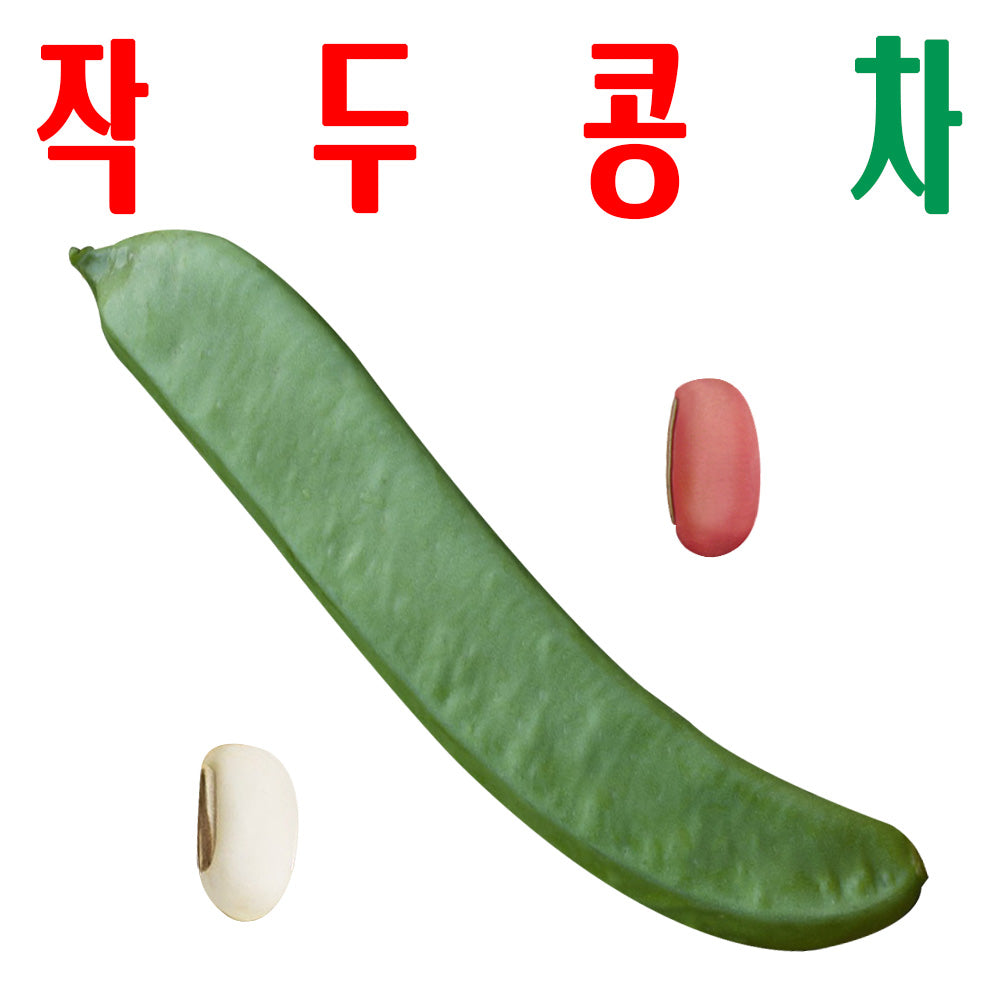
What is sword bean tea?Sword bean tea is a disposable tea bag made from the young pods of the red sword bean. The tea has a flavor similar to Solomon's seal tea, featuring the unique aroma and savory taste characteristic of sword beans. Simply place a tea bag in hot water and steep for 1-2 minutes to enjoy the rich taste and aroma of the beans and pods. The tea has a captivating reddish hue, and its excellent aroma and taste make it a wonderful tea for enjoyment, health, and social gatherings. You can steep it 1-2 more times. Here is a brief introduction to the sword bean, the raw ingredient of the tea. BeansBotanically, "beans" refer to the fruit of legume plants. While there are nearly 20,000 species of legumes, not many are edible. In Korea, about 30 species are cultivated, and the sword bean is one of the edible beans grown on our soil. In the past, the sword bean did not receive much popularity from our ancestors. The most historically cultivated and popular bean in Korea is the soybean, which has been grown since BC. The soybean is a Korean bean native to the Korean Peninsula and Manchuria, and is the most famous and popular bean in the world. Sword Bean (Jakdu-kong)The sword bean (Jakdu-kong) is named after the Korean rural tool "jakdu" (a fodder cutter), as the appearance of its pod resembles the tool. In Korea, China, and Japan, it is known by the Sino-Korean terms dodu (刀豆=sword 刀, bean 豆) or hyeopgeomdu (挾劍豆=clamped 挾, sword 劍), because the pod looks like a blade. The Korean word "jakdu" originates from the Sino-Korean term jakdo (斫刀=cut 斫, blade 刀), so the name is also related to a blade. The "jakdu" used in Korean farming is a blade for cutting grass and rice straw for cattle; it has a sharpened edge on the belly of the blade, but the back is dull. When fully grown, a sword bean pod can reach 30cm in length and about 5cm in width at the back. We harvest the young pods, before the beans inside grow large and bulge out, for health or culinary use. The photo below shows young sword bean pods. |
||||||||||||||
|
||||||||||||||
|
Young sword bean pods are thinly sliced and used as a vegetable in soups or stews. When using raw beans, they must be blanched in salt water, the water discarded, and then boiled again in fresh water. Fully matured beans should be roasted before use. People utilize sword beans in various ways: brewing them as tea, grinding them into a powder to mix into water or milk, making them into pills, using them to make meju (fermented soybean paste blocks) or soy sauce, making sword bean liquor, adding the powder to doenjang-guk (soybean paste soup) or cheonggukjang, or soaking them to make bean rice. In botanical classification, the sword bean is an annual plant belonging to the genus Canavalia. Among the species in this genus, the jack bean (Canavalia rosea), sword bean, and others are famous. The sword bean is known for having the largest seeds among the 20,000 types of legumes in the Fabaceae family. Sword beans are divided into red and white varieties based on the color of their skin; the red variety has more nutrients in its pod than in the bean itself, so the pods are often used for health purposes, while the white variety is often used for culinary purposes. The red variety has reddish bean skins and stems, whereas the white variety has white skins and green stems. The photo below shows the beans. |
||||||||||||||
|
||||||||||||||
History of the Sword BeanThe origin of the sword bean is believed to be the tropical regions of Asia, India, and Africa. Sword beans are now widely distributed throughout the tropical, subtropical, and temperate regions of Asia, Australia, Africa, and the Americas. Although originating in the tropics, the sword bean has evolved to be cold-tolerant enough to grow in regions above 40 degrees latitude, such as Heilongjiang Province in China, the northeastern United States, and the northwestern Mediterranean region of France. In India and Africa, young sword bean pods are frequently used as a vegetable. Records indicate that sword beans were used for food and health purposes by the Goryeo royal court, proving our ancestors were aware of them; however, it is unclear whether the beans used during that time were cultivated on our land or imported. Records of sword beans exist from the reign of King Seongjong of the Joseon Dynasty in 1491, but they are not listed in the Dongui Bogam, published over 100 years later in 1613. Notably, the Compendium of Materia Medica (Bencao Gangmu) of the Ming Dynasty, published 17 years before the Dongui Bogam in 1596, does include the sword bean. The sword bean is also not listed as a health material in the Bangyak Happyeon, a record from the late Joseon Dynasty. In Korea, the sword bean was not commercially grown until the late 1990s. The revitalization of Korean sword bean cultivation began in 1997 when Kim Geun-sil and four colleagues planted seeds on a 30,000-square-meter field in Chopyeong-myeon, Jincheon-gun, using seeds gifted by Heilongjiang Province, China, to Chungcheongbuk-do. Today, sword beans are commercially cultivated in the central region and further south. Why the Sword Bean Became FamousDespite being a large bean, roughly five times the size of a regular bean, the sword bean was not popular because it has low oil content and is inconvenient to process. The main factor behind the sudden rise in popularity of a bean that was once disregarded globally is the worldwide well-being trend that began to sweep through wealthy nations in the 1980s. Health-conscious individuals living with the motto of achieving longevity through a healthy body and mind took notice of the Concanavalin A component in sword beans. Furthermore, the red pigment found in red sword beans and the excellent taste and aroma of sword bean tea are also considered factors contributing to its popularity. Composition of the Sword BeanBelow is the general composition table for sword beans provided by the National Institute of Agricultural Sciences under the Rural Development Administration. "Dry weight basis" means the ratio was determined after removing moisture. Sword Bean General Composition Analysis Table (Rural Development Administration, 2010, dry weight basis, 125kcal/100g sword bean with 68% moisture) |
||||||||||||||
|
||||||||||||||
|
The general composition of the sword bean shows lower protein and lipid content compared to the soybean (meju bean), which is the most widely cultivated bean in the world. In particular, the lipid content is so low that it is impossible to produce soybean oil. This is likely the reason why people avoided cultivating sword beans in the past. Here are a few important, special, and trace components found in sword beans.
Sword beans are valued as a health food ingredient with neutral or warm properties. |
||||||||||||||


| 1). | The ingredients for the sword bean tea are supplied by the Korea Herbal Medicine Association. |
| 2). | It is a pure tea that contains no preservatives, no artificial colors, and no flavorings; nothing is added to the tea. |
| 3). | The tea bag containing the tea particles is made of biodegradable, eco-friendly fiber that can be recycled as compost. |
| 4). | The tea bag containing the tea particles has received European certification as food-contact material harmless to the human body. |
| 5). | We have made the tea bag strings long so that you can easily brew the tea in bottles or tumblers. |
| 6). | The packaging is an aluminum zipper bag, which is resistant to moisture and preserves the taste and aroma for a long time. |
| 7). | The savory taste similar to Solomon's Seal, the reddish-brown color, and the savory aroma are truly excellent. |
| 8). | Because it is a caffeine-free grain tea, it is also suitable for children. |
| Introduction |
The supplier of this product is Onyudam (CEOs: Yoon Sung-hyun, Jo Su-in) and the manufacturer is Hapcheon Herbal Processing Farming Association Corp. (CEO: Baek Moon-gi). While running a health herb farm for over 20 years with his parents, CEO Baek established the Hapcheon Herbal Processing Farming Association Corp. in 1996, built a processing factory the following year, received the $500,000 Export Tower award for the first time in 2003, and served as the 17th-18th President of the Korea Herbal Medicine Association. The Hapcheon Herbal Processing Farming Association Corp. cultivates about 60 types of health plants including chrysanthemum, hydrangea, mulberry, persimmon, peony, achyranthes, safflower, motherwort, schisandra, goji berry, cornelian cherry, milk vetch, green tea, tara vine, and balloon flower in Hapcheon-eup, Hapcheon-gun, where the association is located, and uses them as ingredients for health tea. The Hapcheon Herbal Processing Farming Association Corp. sells its products through domestic and international sales channels and also supplies products to other companies through OEM manufacturing. The Hapcheon Herbal Processing Farming Association Corp. received the Minister of Agriculture and Forestry Award in 2002, registered the 'Sangrime' trademark in 2007, received the international food safety certification ISO22000 in 2015, was registered as a venture company in the same year, received a patent for a balloon flower tea manufacturing method in 2017, received the MFDS HACCP certification (No. 2018-2-9156) in 2018, and received organic certification (No. 17100199) for chrysanthemum crops in 2019, thus establishing itself as a small but strong company. Below is a brief introduction to the Hapcheon Herbal Processing Farming Association Corp. |
|---|---|
| Name | Hapcheon Herbal Processing Farming Association Corp. (CEO: Baek Moon-gi) |
| Address | 16 Naegok-gil, Hapcheon-eup, Hapcheon-gun, Gyeongsangnam-do |

|
|
| 010-3352-7949 |
| 1). | Put the tea bag in hot water and steep for 1-2 minutes before drinking. |
| 2). | After drinking the first brew, you can use the same tea bag 1-2 more times. |
| 3). | Store in a cool, dry place away from direct sunlight. |
| Ingredient Name | Sword bean |
|---|---|
| Origin | Republic of Korea |
| Content | Immature pods of red-seeded sword bean (domestic) 100% |
| Nutritional Information | Not legally applicable |
| Sales Unit | Bag (contains 30 tea bags in a polyethylene bag) |
|---|---|
| Total Content | 30g (1g x 30 tea bags) |
| Usage Period | It is difficult to estimate the usage period for one bag as it depends on individual consumption. |
| Packaging Material | Tea bag: Biodegradable fiber Plastic bag: Polyethylene |
| Package Dimensions | Width 15cm x Length 23cm x Thickness 6.5cm |
| Food Type | Tea (Single-origin steeped tea) |
|---|---|
| Manufacturing Date | Unable to determine the manufacturing date as the product is shipped from the supplier's cold storage, inquiry number: 02-967-8133 |
| Expiration Date | Indicated on the outer packaging; products with less than 1 month left until expiration from the date of shipment will not be shipped, inquiry number: 02-967-8133 |
| Not legally applicable. |
| Not legally applicable. |
| Not legally applicable. |
| Payment Information |
1). For bank transfer payments, you can make the purchase payment via PC banking, internet banking, phone banking, or bank deposit. - The name of the depositor must match the name entered at the time of order, and orders not paid for within 3 days will be automatically canceled. 2). For credit card or simple payments, the payment system processes the transaction immediately, so no further action is required. |
|---|---|
| Delivery Information |
1). Delivery Method: Courier service 2). Delivery Region: Nationwide 3). Delivery Fee: Basically free, but some charges may apply 4). Delivery Duration: 1-3 days: - Orders paid for before 3 PM can be received the following day, and orders paid for after 3 PM can be received the day after next. 5). Notes:- For island regions, you may have to pay additional delivery fees. - For bank transfers, shipping starts after your payment has been confirmed. - Shipping may be slightly delayed during holidays or when there are special circumstances with the courier company. |
| Exchange/Return |
1). Cases where exchange and return are possible
- Exchange/return is possible within 7 days from the date of receiving the product. - If the received product differs from the labeling/advertising, within 3 months of receipt or 30 days from the date of becoming aware of the fact. 2). Cases where exchange and return are not possible (Reasons for restriction on withdrawal of subscription under the "Consumer Protection in E-Commerce Act")- If the product is lost or damaged due to reasons attributable to the customer. (Excluding cases where packaging is damaged to check product contents) - If the packaging has been opened or damaged, resulting in a loss of product value. - If the product value has significantly decreased due to customer use or partial consumption. - If the product value has significantly decreased to the extent that it is difficult to resell due to the passage of time. - If the packaging of products that can be replicated is damaged. 3). Warranty conditions and quality assurance standards related to exchange and return follow the "Framework Act on Consumers".4). Notes: - If you request an exchange or return due to a change of mind, you must cover the delivery costs. |
| Damage Compensation/ Complaint/Dispute Resolution Standards |
KFTC Consumer Dispute Resolution Standards |
| Terms of Transaction | Terms of Service(https://bit.ly/3qDTO1Q) |
Shipping Cost
Shipping Cost
1. Free Shipping [some exclusions]
2. Free shipping on orders over ₩30,000
Shipping Location
Shipping Location
Shipped from manufacturers located throughout South Korea
Shipping Policy
Shipping Policy
1. Immediate reshipment if the product is lost after dispatch
2. Immediate exchange if the received product is damaged
3. Same-day dispatch (before 12 PM) for next-day receipt
Delivery Company
Delivery Company
CJ Logistics, Logen Express, Korea Post EMS, Lotte Express, etc.
Delivery Scheduled
Delivery Scheduled
1. Purchases made before 12 PM will be received the next day.
2. Purchases made before 2 PM will be received the next day [certain items].
3. Purchases made after 12 PM/2 PM will be received two days later.
Return Policy
Return Policy
1. Returns accepted within 7 days of product receipt
2. Returns accepted within 3 months for products that differ from advertised description
3. Returns accepted within 30 days from the date the discrepancy was discovered
4. Live products are final sale and non-returnable
5. For simple returns, buyer is responsible for round-trip shipping costs
6. For returns due to seller's fault, round-trip shipping is free
Security Policy
Security Policy
Secure payments are made through world-renowned payment companies such as PayPal, Visa, and Mastercard. Your payment information will not be shared with any third parties.
Privacy Policy
Privacy Policy
Your personal information collected for payment and delivery will be securely protected during delivery and discarded after delivery is complete.