Shipping Cost
Shipping Cost
1. Free Shipping [some exclusions]
2. Free shipping on orders over ₩30,000
Shipping Location
Shipping Location
Shipped from manufacturers located throughout South Korea
Shipping Policy
Shipping Policy
1. Immediate reshipment if the product is lost after dispatch
2. Immediate exchange if the received product is damaged
3. Same-day dispatch (before 12 PM) for next-day receipt
Delivery Company
Delivery Company
CJ Logistics, Logen Express, Korea Post EMS, Lotte Express, etc.
Delivery Scheduled
Delivery Scheduled
1. Purchases made before 12 PM will be received the next day.
2. Purchases made before 2 PM will be received the next day [certain items].
3. Purchases made after 12 PM/2 PM will be received two days later.
Return Policy
Return Policy
1. Returns accepted within 7 days of product receipt
2. Returns accepted within 3 months for products that differ from advertised description
3. Returns accepted within 30 days from the date the discrepancy was discovered
4. Live products are final sale and non-returnable
5. For simple returns, buyer is responsible for round-trip shipping costs
6. For returns due to seller's fault, round-trip shipping is free
Security Policy
Security Policy
Secure payments are made through world-renowned payment companies such as PayPal, Visa, and Mastercard. Your payment information will not be shared with any third parties.
Privacy Policy
Privacy Policy
Your personal information collected for payment and delivery will be securely protected during delivery and discarded after delivery is complete.
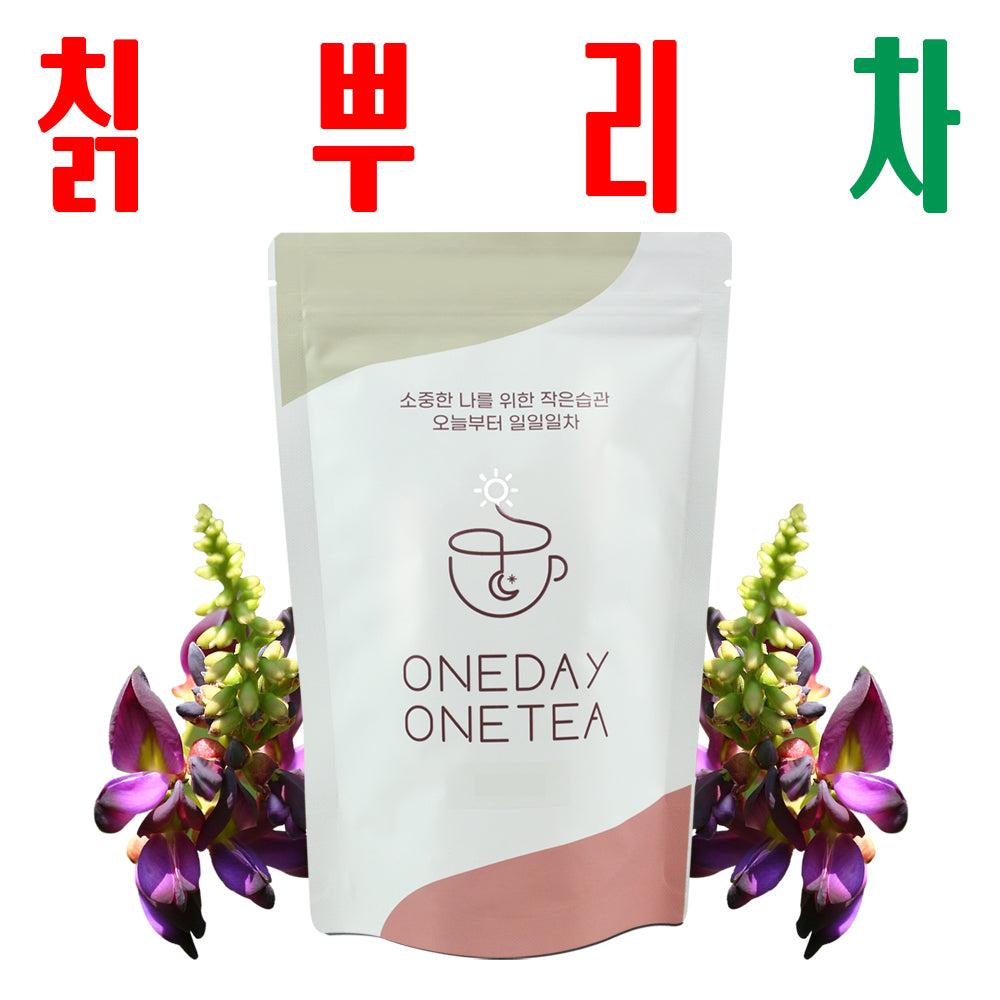
Kudzu Tea / Kudzu Root Tea / Kudzu Tea Bags 30 Tea Bags
Kudzu Tea / Kudzu Root Tea / Kudzu Tea Bags 30 Tea Bags
Kudzu/Kudzu Root/Galgeun
Kudzu Tea/Kudzu Root Tea/Galgeun Tea

|
||||||||||
What is Kudzu Tea?Kudzu tea is a single-use tea bag product made from processed kudzu roots. Simply place a kudzu tea bag in hot water and steep for 2-3 minutes to fully enjoy the unique taste and aroma of the kudzu root. Kudzu tea is a health-focused herbal tea. Here is a brief introduction to kudzu, the main ingredient of this tea. KudzuKudzu is a perennial vine belonging to the Fabaceae (pea) family and the Pueraria genus. As it is native to Asian regions, including Korea, China, and Japan, kudzu has been used for food and health purposes in Korea for many years. In the West, however, kudzu is not used for food or health but is instead considered a troublesome plant. This is because kudzu vine leaves blanket other plants, blocking their photosynthesis and causing them to die. Regardless of whether other plants survive, kudzu continues to grow its vine leaves to perform photosynthesis and store starch in its roots. Humans extract this starch from kudzu roots to make kudzu cold noodles and kudzu noodles. Kudzu vines extend by putting out new shoots, and in the summer, these shoots grow very rapidly, sometimes as much as 30cm in a single day. Due to the powerful growth energy of these shoots, humans use all parts of the kudzu plant—roots, leaves, flowers, and seeds—for health. We process kudzu into various forms such as decoctions, teas, powders, and pills, or make ointments for topical application. Furthermore, kudzu is used to make textiles, wallpaper, ropes, baskets, and mats. Because kudzu was a highly useful plant to our ancestors, it is referred to as the "Pearl of the Earth." The reason it is considered a pest in the West is simply because Westerners were unaware of its uses and preparation methods; in other words, there is no "kudzu culture" in the West. Etymology of "Chik" (Kudzu)Since kudzu is native to our land and our ancestors encountered it frequently for thousands of years, it is clear that they had a name for it, though the etymology is unclear. It is a fact that it was recorded as 'Chul' in the 15th century when Hangul was created, and changed to 'Chik' in the 19th century, which is the term we use today. The Hanja character for kudzu is 葛, and its pronunciation was noted as 'Jileul' (叱乙). Before the creation of Hangul, the pronunciation of 葛 was 'Jileul', but after the invention of Hangul, it was recorded as the Hangul 'Chul'. While 'Jileul' (叱乙) would be pronounced as such today, it was closer to 'Chul' at the time. Therefore, it is reasonable to view the evolution as 叱乙 > Chul > Chik. Origin of the Hanja Term for Kudzu RootThe Hanja term for kudzu root is Galgeun(葛根). Beyond the general meaning of "kudzu root," Galgeun has a very special meaning: "The root of the person with the surname Gal." Legend has it that there was once a sole survivor of a family named Gal(葛), which had been ruined for political reasons. To make a living, he sold plant roots and appended his own surname, Gal(葛), to the root, calling it "Galgeun." Thus, the surname Gal existed in the world before the plant's name did. History of KudzuKudzu appears from the very beginning of the recorded history of China, which has a longer written history than Korea. Kudzu first appeared in records from the Zhou Dynasty (1046-256 BC), and it debuted as a health ingredient in the "Shennong Ben Cao Jing" (Classic of Herbal Medicine), presumed to be from the Qin and Han Dynasties. In Korea, kudzu first appeared in the "Samguk Yusa" (Memorabilia of the Three Kingdoms), which contains early historical records, and it first appeared as a health ingredient in the "Dongui Bogam" (Principles and Practice of Eastern Medicine) during the Joseon Dynasty. Therefore, we know that humans have used kudzu for food and health for at least 2,000 years, and that our ancestors have known and utilized it since the Three Kingdoms period. "Female" Kudzu and "Male" KudzuKudzu produces bisexual flowers(兩性花) that contain both pistils and stamens within a single blossom. Therefore, there are no separate female or male flowers, nor are there female or male plants, so "female kudzu" and "male kudzu" are not terms used in plant taxonomy. However, people call tough, slippery kudzu roots with little juice and a bitter taste "Male Kudzu," while calling plump, tender, juicy, and sweet roots "Female Kudzu." These are terms created by people to distinguish the appearance of kudzu roots. |
||||||||||

|
||||||||||
Components of Kudzu RootBelow is the general composition table of kudzu root published by the Rural Development Administration of Korea. "Dry weight basis" in parentheses below means the values were measured with moisture removed. |
||||||||||
|
||||||||||
|
The general composition of kudzu root is 91% carbohydrates, and it is characterized by an extremely high starch content. Here are a few important, special, and trace components of kudzu:
In addition to Korea, kudzu starch obtained from kudzu roots and kudzu flowers are widely used as ingredients for tea and food in China, Japan, Taiwan, Vietnam, and other regions. |
| 1). | The kudzu root used as the tea ingredient is supplied by the Korea Herbal Medicine Association. |
| 2). | This is a pure tea with no preservatives, colors, or artificial flavorings added. |
| 3). | The tea bag containing the tea particles is made of biodegradable, eco-friendly fiber that can be composted. |
| 4). | The tea bag material is European-certified as a food-contact substance that is harmless to the human body. |
| 5). | The tea bag string is designed to be long so that it can be steeped in bottles or tumblers. |
| 6). | The packaging bag is an aluminum zipper bag, making it resistant to moisture and preserving the taste and aroma for a long time. |
| 7). | The taste of the tea is sweet, bitter, and slightly astringent. |
| Intro |
The product is supplied by Onyudam (CEOs: Yoon Sung-hyun, Jo Su-in) and manufactured by Hapcheon Herbal Processing Farming Association Corporation (CEO: Baek Mun-gi). CEO Baek, having managed a medicinal plant farm for over 20 years with his parents, established the Hapcheon Herbal Processing Farming Association Corporation in 1996 and built a processing plant the following year. He first received a $500,000 export award in 2003 and served as the 17th-18th president of the Korea Herbal Medicine Association. The Hapcheon Herbal Processing Farming Association Corporation cultivates about 60 types of medicinal plants, including chrysanthemums, hydrangeas, mulberry, persimmons, peonies, achyranthes, safflower, motherwort, schisandra, goji berries, cornus fruit, astragalus, green tea, actinidia, and bellflower, in Hapcheon-eup, where the association is located, to use as raw materials for health teas. The association sells its products through domestic and international distribution channels and also supplies products to other companies through OEM manufacturing. The Hapcheon Herbal Processing Farming Association Corporation received the Minister of Agriculture and Forestry Award in 2002, registered the trademark 'Sangrime' in 2007, received the ISO22000 international food safety management certification in 2015, and was registered as a venture business in the same year. They patented a bellflower tea manufacturing method in 2017, received HACCP certification from the Ministry of Food and Drug Safety (No. 2018-2-9156) in 2018, and received organic certification for chrysanthemum crops (No. 17100199) in 2019, solidifying its status as a strong small business. A brief introduction to the Hapcheon Herbal Processing Farming Association Corporation is provided below. |
|---|---|
| Name | Hapcheon Herb Processing Farming Association Corp. (CEO: Baek Mun-gi) |
| Address | 16 Naegok-gil, Hapcheon-eup, Hapcheon-gun, Gyeongnam |

|
|
| 010-3352-7949 |
| 1). | Place the tea bag in hot water and let it steep for 2-3 minutes before drinking. |
| 2). | You can enjoy the tea at any time regardless of meals, but it is better to drink it on an empty stomach. |
| 3). | Arrowroot tea can be enjoyed either hot or cold. |
| 4). | Store in a cool place away from direct sunlight. |
| Ingredients | Arrowroot |
|---|---|
| Country of Origin | Republic of Korea |
| Composition | 100% Arrowroot |
| Nutritional Info | Not applicable under law |
| Sales Unit | Bag (contains 30 tea bags inside a polyethylene bag) |
|---|---|
| Total Content | 30g (1g x 30 tea bags) |
| Consumption Period | Difficult to estimate as it depends on the user's consumption rate. |
| Packaging Material | Tea bag: Biodegradable fiber Plastic bag: Polyethylene |
| Package Size | Width 15cm x Height 23cm x Thickness 6.5cm |
| Food Type | Tea (Single-ingredient infusion) |
|---|---|
| Manufacturing Date | Manufacturing date cannot be determined as products are shipped from our cold storage; please call 02-967-8133 for inquiries. |
| Expiration Date | Marked on the package. We do not ship products with less than 1 month left before expiration. For inquiries, call: 02-967-8133 |
| Not applicable under law. |
| Not applicable under law. |
| Not applicable under law. |
| Payment |
1). For bank transfers, payment can be made via PC banking, internet banking, phone banking, or at a bank. - The name of the depositor must match the name entered during the order; orders not paid for within 3 days are automatically canceled. 2). For credit card or simple payments, the payment system processes it immediately, requiring no further action. |
|---|---|
| Shipping |
1). Method: Courier 2). Delivery area: Nationwide 3). Delivery fee: Generally free, but some cases apply. 4). Shipping period: 1 to 3 days: - Payments confirmed before 3:00 PM are delivered the next day; those after 3:00 PM are delivered the day after. 5). Notes:- Additional delivery fees may apply for island regions. - For bank transfers, shipping begins after payment confirmation. - Shipping may be delayed during holidays or due to issues with the shipping company. |
| Exchange/Returns |
1). Exchange/Return eligibility - Exchange/Return possible within 7 days of receiving the item. - If the delivered item differs from the display/advertisement, within 3 months of delivery or 30 days of discovery. 2). Non-eligible items ("E-commerce Act" limitations)- Items lost or damaged due to customer fault (excluding checking the content via packaging). - Items where packaging is opened or damaged, reducing value. - Significant reduction in value due to customer use or partial consumption. - Significant reduction in value due to time making resale impossible. - Damaged packaging for copyable items. 3). Warranty conditions and quality assurance follow the "Framework Act on Consumers."4). Notes: - Shipping costs apply for change-of-mind exchanges or returns. |
| Complaint/Dispute Resolution |
Fair Trade Commission's Consumer Dispute Resolution Standards |
| Terms of Service | Terms of Service (https://bit.ly/3qDTO1Q) |
Shipping Cost
Shipping Cost
1. Free Shipping [some exclusions]
2. Free shipping on orders over ₩30,000
Shipping Location
Shipping Location
Shipped from manufacturers located throughout South Korea
Shipping Policy
Shipping Policy
1. Immediate reshipment if the product is lost after dispatch
2. Immediate exchange if the received product is damaged
3. Same-day dispatch (before 12 PM) for next-day receipt
Delivery Company
Delivery Company
CJ Logistics, Logen Express, Korea Post EMS, Lotte Express, etc.
Delivery Scheduled
Delivery Scheduled
1. Purchases made before 12 PM will be received the next day.
2. Purchases made before 2 PM will be received the next day [certain items].
3. Purchases made after 12 PM/2 PM will be received two days later.
Return Policy
Return Policy
1. Returns accepted within 7 days of product receipt
2. Returns accepted within 3 months for products that differ from advertised description
3. Returns accepted within 30 days from the date the discrepancy was discovered
4. Live products are final sale and non-returnable
5. For simple returns, buyer is responsible for round-trip shipping costs
6. For returns due to seller's fault, round-trip shipping is free
Security Policy
Security Policy
Secure payments are made through world-renowned payment companies such as PayPal, Visa, and Mastercard. Your payment information will not be shared with any third parties.
Privacy Policy
Privacy Policy
Your personal information collected for payment and delivery will be securely protected during delivery and discarded after delivery is complete.