Shipping Cost
Shipping Cost
1. Free Shipping [some exclusions]
2. Free shipping on orders over ₩30,000
Shipping Location
Shipping Location
Shipped from manufacturers located throughout South Korea
Shipping Policy
Shipping Policy
1. Immediate reshipment if the product is lost after dispatch
2. Immediate exchange if the received product is damaged
3. Same-day dispatch (before 12 PM) for next-day receipt
Delivery Company
Delivery Company
CJ Logistics, Logen Express, Korea Post EMS, Lotte Express, etc.
Delivery Scheduled
Delivery Scheduled
1. Purchases made before 12 PM will be received the next day.
2. Purchases made before 2 PM will be received the next day [certain items].
3. Purchases made after 12 PM/2 PM will be received two days later.
Return Policy
Return Policy
1. Returns accepted within 7 days of product receipt
2. Returns accepted within 3 months for products that differ from advertised description
3. Returns accepted within 30 days from the date the discrepancy was discovered
4. Live products are final sale and non-returnable
5. For simple returns, buyer is responsible for round-trip shipping costs
6. For returns due to seller's fault, round-trip shipping is free
Security Policy
Security Policy
Secure payments are made through world-renowned payment companies such as PayPal, Visa, and Mastercard. Your payment information will not be shared with any third parties.
Privacy Policy
Privacy Policy
Your personal information collected for payment and delivery will be securely protected during delivery and discarded after delivery is complete.
Citron Tea / Hibiscus Tea / Citron Hibiscus Tea Bags (30 count)
Citron Tea / Hibiscus Tea / Citron Hibiscus Tea Bags (30 count)
Yuzu/Hibiscus
Yuzu Tea/Hibiscus Tea/Yuzu Tea Bag/Yuzu Tea Bag Tea/Yuzu Hibiscus Tea

|
||||||||||||||||||
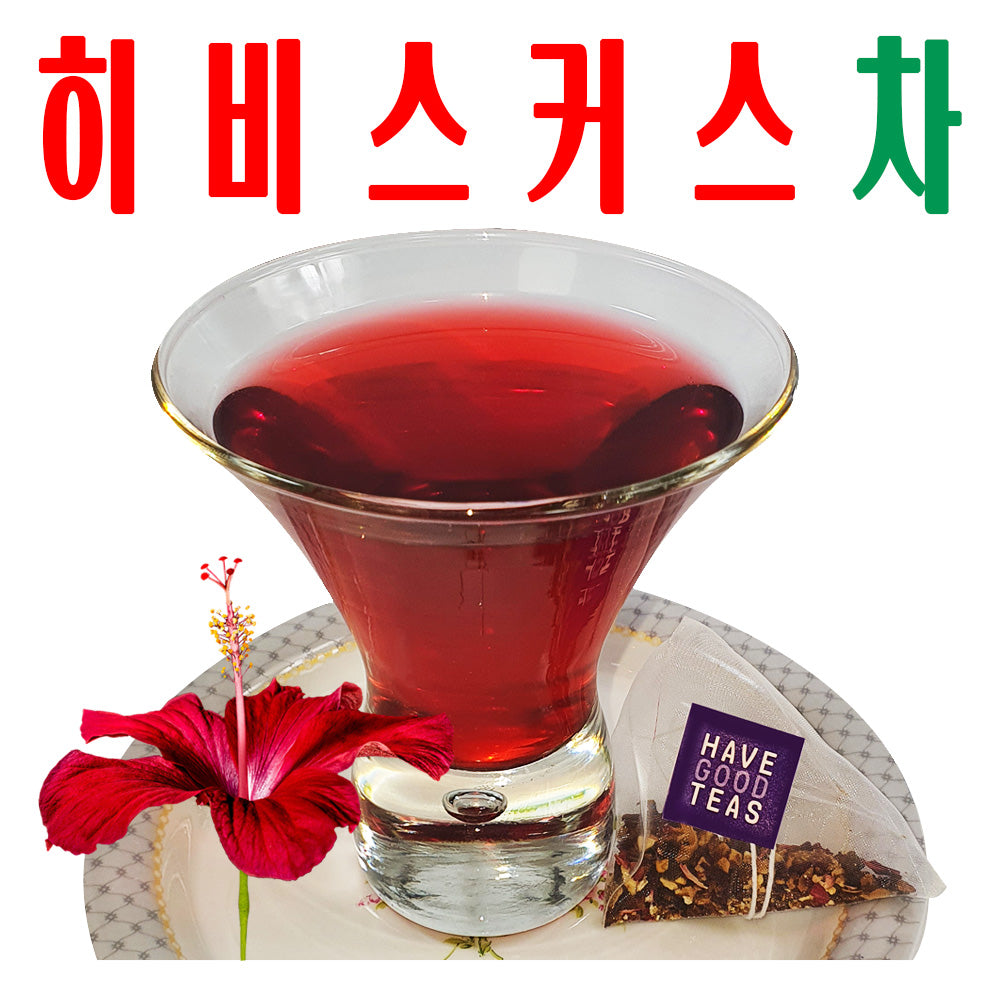
What is Yuzu Hibiscus tea?Yuzu Hibiscus tea is a tea made from yuzu and hibiscus that makes your mouth water the moment you drink it. It features the strong, tart taste and refreshing aroma characteristic of yuzu, combined with the incredibly attractive ruby-red color of the hibiscus tea infusion. Simply place a tea bag in hot water and steep for about one minute to enjoy the rich flavor and aroma of yuzu and hibiscus. Because the aroma is strong, it can be enjoyed as a personal, health, or social tea with a touch of sweetness. You can steep the tea bag 1-2 more times. Below is a brief introduction to the raw ingredients, yuzu and hibiscus. YuzuYuzu is the fruit of the yuzu tree and belongs to the citrus family. The yuzu tree is a hybrid between mandarin and Ichang papeda (宜昌枳). Native to the upper reaches of the Yangtze River in China, the yuzu tree is rarely cultivated in China but is widely grown in Korea and Japan. Wild yuzu can be found in the Yunnan, Hubei, Sichuan, and Tibet regions of China. The yuzu tree was first introduced to our land during the Unified Silla period, when the trader Jang Bogo brought it from the Tang Dynasty in 840 AD and planted it in Wando, Jeollanam-do. Today, the southern coast and Jeju Island are the main production areas for yuzu. In Korea and Japan, yuzu is written with the same Chinese characters 柚子 (Yuzu), but in China, where it originates, it is referred to as Xiangcheng (香橙 = fragrant 香, citrus/orange 橙). In China, since the character 橙 (cheng) is synonymous with Western oranges, 'Xiangcheng' means 'fragrant orange.' The yuzu's characteristic of having a stronger aroma than an orange is captured in its name. However, in China, the characters 柚子 (yuzu) actually refer to a fruit known as Xiang luan (香欒). While the Chinese characters 柚子 refer to the same fruit in Korea and Japan, they denote something similar but different in China. Compared to other citrus fruits, yuzu has a thick peel with a very powerful aroma, and it is often used for the purpose of enjoying the scent of the peel along with its juice. It is perfect for enhancing the flavor of dishes and stimulating the appetite. Salted yuzu is sometimes used in meat dishes, and yuzu is often preserved in sugar or honey to make yuzu-cheong (citron marmalade), which can then be mixed with hot water to make tea or used as a flavoring for confectionery. People process yuzu into various forms, including juice, concentrated juice, granulated juice, mixed beverages, tea powder, marmalade, vinegar, and yuzu wine. Yuzu is called by four different names depending on its growth stage. When the flower blooms, it is called Hwayuzu (花); when it is a young fruit, Silyuzu (實); when the fruit is fully grown but still green, Cheongyuzu (靑); and when it is fully ripe and yellow, Hwangyuzu (黃). These four names exist because yuzu is categorized based on its use as a spice. The flower buds, flowers, young fruit, immature fruit, and ripe fruit can all be used as spices. The picture below shows three types of yuzu. Cheongyuzu (green yuzu) only differs from Hwangyuzu (yellow yuzu) in color. |
||||||||||||||||||
|
||||||||||||||||||
|
Yuzu is listed as a medicinal ingredient in the ancient Chinese medical text Shennong Ben Cao Jing, as well as in the Korean Dongui Bogam. This shows that yuzu has been recognized and used as a medicinal ingredient for over 2,000 years. When used for medicinal purposes, the immature green yuzu (Cheongyuzu) is frequently used. Yuzu has such a strong aroma that it is referred to in China as a 'fragrant orange.' The peel of the yuzu has a more potent aroma than the pulp and is more significant as a medicinal ingredient. In particular, the hard, outermost layer of the peel contains a high concentration of essential oils and is sometimes separated for use. Citrus (Gyul)Gyul (tangerine/citrus) is not the name of a single fruit but a collective term referring to yuzu, mandarins, oranges, grapefruits, lemons, limes, and more. When the term gyul (橘) was first coined, it likely referred to one specific fruit, but as similar fruits were discovered, it became a collective noun. While oranges, grapefruits, lemons, and limes feel like Western fruits to us due to their names, these names actually emerged or evolved as they traveled from the East to the West. The orange is a type of gyul called Tiancheng (甛橙 = sweet 甛) or Tang-gyul (唐橘 = Tang Dynasty 唐). Although Korea is not the origin of citrus, there are as many as 350 types of citrus on Jeju Island, including yuzu, Dangyuzu, Cheonggyul (靑), Honggyul (紅), Kumquat (金), Nokgyul (綠), Sangyul (山), Byeonggyul (甁), and Hagyul (夏). The reason for this variety is the characteristic of citrus trees being very easy to cross-pollinate and reproduce. Because they cross-breed easily, even fruits called by the same name like 'orange' or 'lemon' can vary in juice color and peel thickness depending on the parent tree. The image below shows cross-sections of yuzu, lemon, lime, and orange. |
||||||||||||||||||
|
||||||||||||||||||
History of CitrusCitrus is the most widely cultivated fruit in the world, originating in the eastern foothills of the Himalayas, in the subtropical region spanning from northeastern India and Myanmar to southwestern China. The pomelo appeared in Southeast Asia, the citron in South Asia, and the true mandarin in China. These three are the ancestors of today's citrus fruits; from the pomelo came the grapefruit, from the citron came the lemon and lime, and from the true mandarin came the yuzu, tangerine, and orange. Yuzu, tangerines, and oranges share the same ancestry and are closely related. Between 3000 and 1500 BC, citrus fruits spread from their origin to Southeast Asian islands, Australia, and the surrounding areas, eventually reaching the Mediterranean via overland and maritime routes used by spice merchants. The Greek scholar Theophrastus (371-287 BC) provided proof that citrus existed in the Mediterranean by being the first European to mention it. In 1565, the Spanish spread citrus to Florida, North America, and around the same time, they were also introduced to Mexico and South America. As of 2019, Brazil is the largest producer of oranges, followed by China and India. In China, the origin of citrus, Yan Ying of the State of Qi visited the State of Chu around 500 BC. He remarked to King Ling of Chu, "It is said that if you plant a citrus tree south of the Huai River, it becomes a citrus, but if you plant it north of the Huai River, it becomes a trifoliate orange (jiji)," which gave rise to the proverb Gyul-hwa-wi-ji (橘化爲枳 = citrus 橘, become/transform 化, into 爲, trifoliate orange 枳). The citrus mentioned in the proverb refers to yuzu, proving that yuzu existed south of the Huai River at the time, while trifoliate oranges grew to the north. Through this proverb, we know that citrus was recognized in its place of origin at least 2,500 years ago. The exact time when citrus reached Korea, a neighbor to the origin of citrus, is unknown, but it is estimated to have been here since before the common era. The earliest dated record is from 476 AD, stating that King Munju of Baekje received citrus as a tribute from Tamna-guk (Jeju Island). Citrus has been in Korea for over 2,000 years, and yuzu for about 1,200 years. Due to climate requirements, it is only produced in parts of Jeju Island and the southern coast. Jeju mandarins, Goheung yuzu, and Geoje yuzu are famous. Gamgyul, Gamja, MilgamGamgyul (柑橘) is a collective term referring to gamja and gyul. Gamja (柑子) is an alias for Honggyul (red mandarin). The Hanja 柑 (gam) is a character expressing a type of citrus. The mandarin we commonly eat is the Satsuma mandarin. Satsuma mandarin (溫州蜜柑) refers to the milgam (蜜柑 = honey 蜜, gamja 柑) produced in Wenzhou, Zhejiang, China. Today, milgam has become the representative term for gamgyul, making it synonymous with gamgyul. Furthermore, it is also used as milgam = gamgyul = gyul. However, gamgyul and gyul are not words for a single fruit originally, but collective terms. Denggyul, Dengja, OrangeDenggyul (橙橘) is a collective term for dengja and gyul. Dengja (橙子) is an alias for yeogyul (廬橘). The Hanja 橙 (deng) is also a character for a type of citrus. Dengja is typically divided into Tiancheng (甛橙 = sweet 甛), known for its sweetness, and Suancheng (酸橙 = sour 酸), known for its bitterness. The sweet Tiancheng traveled to the West and became the orange. Because oranges account for 70% of global citrus production and Brazil is the largest producer, oranges feel like Western fruit to us, but they are Eastern fruits that originated in the East. Trifoliate Orange (Jiji) and CitrusTrifoliate orange was also considered a type of citrus in the past and was called Gugyul (枸橘). Although they share the same ancestors, trifoliate orange and citrus are botanically distinct species (種) and belong to different genera (屬). Since they are different species, the saying "If you plant a citrus tree in the south it becomes a citrus, but in the north it becomes a trifoliate orange" is incorrect. Citrus is citrus, and trifoliate orange is trifoliate orange. Because citrus is vulnerable to cold and cannot live in the north, people in the north could not see citrus and only saw trifoliate oranges. Nutrients in YuzuBelow is the general nutrient composition table for raw yuzu fruit based on data from the National Institute of Agricultural Sciences of the Rural Development Administration. 'Dry weight basis' means the content ratios were determined after removing moisture. General Nutrient Analysis Table for Yuzu (Rural Development Administration, 2015, Dry weight basis, 100g yuzu with 49kcal/86% moisture) |
||||||||||||||||||
|
||||||||||||||||||
|
The dietary fiber content in yuzu is not particularly high. However, the peel is rich in a type of dietary fiber called pectin. Even though yuzu contains a significant amount of carbohydrates, it tastes strongly sour because it is rich in organic acids, which provide the tartness. Here, I will introduce just a few of the important, special, and trace components found in the yuzu fruit.
Hibiscus is a plant native to India, Southeast Asia, and China, and the ruby color produced by anthocyanin in its petals is truly attractive. While hibiscus flowers come in various colors, the ruby-colored flower is the most beautiful. Hibiscus petals are rich in Vitamin C, minerals, and flavonoid components. In Europe, it is trendy to drink hibiscus tea blended with lemon juice and a little bit of added sugar. Its sweet and sour taste is superb. |
||||||||||||||||||


| 1). | The ingredients for Citron Hibiscus Tea are supplied by the Korea Herbal Medicine Association. |
| 2). | This is a pure tea with no preservatives, no artificial colors, and no artificial flavors, with nothing added to the tea. |
| 3). | The tea bag containing the tea particles is a biodegradable, eco-friendly fiber that can be recycled as compost. |
| 4). | The tea bag containing the tea particles has received European certification as a food-contact material harmless to the human body. |
| 5). | The tea bag string has been made long so that you can steep the tea in a bottle or tumbler. |
| 6). | Because the packaging bag is an aluminum zipper bag, it is resistant to moisture, preserving the flavor and aroma for a long time. |
| 7). | The moment you drink the tea, the sour and refreshing citron scent stimulates your salivary glands, causing saliva to flow naturally, and the ruby-colored tea infusion delights the eyes. |
| Intro |
The product supplier is Onyudam (CEO: Yoon Sung-hyun, Jo Soo-in) and the manufacturer is Hapcheon Herbal Processing Farming Association (CEO: Baek Mun-gi). CEO Baek, while running a health herb farm with his parents for over 20 years, established the Hapcheon Herbal Processing Farming Association in 1996, built a processing plant the following year, received the $500,000 Export Tower award for the first time in 2003, and served as the 17th-18th Chairman of the Korea Herbal Medicine Association. The Hapcheon Herbal Processing Farming Association grows over 60 types of health plants, including chrysanthemum, hydrangea, mulberry, persimmon, peony, achyranthes, safflower, motherwort, schisandra, goji berry, cornelian cherry, astragalus, green tea, kiwi, and balloon flower in Hapcheon-eup, Hapcheon-gun, where the association is located, and uses them as raw materials for health teas. The Hapcheon Herbal Processing Farming Association sells its products through domestic and overseas sales channels and also supplies products to other companies through OEM manufacturing. The Hapcheon Herbal Processing Farming Association received the Minister of Agriculture and Forestry Award in 2002, registered the trademark 'Sangrime' in 2007, received the international food safety standard ISO22000 certification in 2015, was registered as a venture company in the same year, registered a patent for a balloon flower tea manufacturing method in 2017, received HACCP certification from the Ministry of Food and Drug Safety (No. 2018-2-9156) in 2018, and also received organic certification for chrysanthemum crops (No. 17100199) in 2019, establishing its stature as a small but strong enterprise. A brief introduction to the Hapcheon Herbal Processing Farming Association is provided below. |
|---|---|
| Name | Hapcheon Herbal Processing Farming Association (CEO: Baek Mun-gi) |
| Address | 16 Naegok-gil, Hapcheon-eup, Hapcheon-gun, Gyeongnam |

|
|
| 010-3352-7949 |
| 1). | Place the tea bag in hot water and let it steep for 1-2 minutes before drinking. |
| 2). | You may add a sweetener to the tea to your preference. |
| 3). | After the first steeping, you may use the same tea bag 1-2 more times. |
| 4). | Store in a cool, dry place away from direct sunlight. |
| Ingredients | Citron peel, Hibiscus petals |
|---|---|
| Origin | South Korea |
| Content | Citron peel (Korean) 70%, Hibiscus petals 30% (Egyptian) |
| Nutritional Info | Not legally applicable |
| Sales Unit | Bag (contains 30 tea bags inside a polyethylene bag) |
|---|---|
| Total Net Weight | 60g (2g x 30 tea bags) |
| Consumption Period | It is difficult to estimate the consumption period for one bag as it depends on individual usage. |
| Packaging Material | Tea bag: Biodegradable fiber Plastic bag: Polyethylene |
| Package Size | 15cm (width) x 23cm (length) x 6.5cm (thickness) |
| Food Type | Tea (Mixed Infusion Tea) |
|---|---|
| Date of Manufacture | The date of manufacture cannot be identified as products are shipped from the supplier's cold storage. For inquiries, call: 02-967-8133 |
| Expiration Date | Indicated on the packaging. Products with less than 1 month of shelf life remaining from the date of shipment will not be sent. For expiration date inquiries, call: 02-967-8133 |
| Not legally applicable. |
| Not legally applicable. |
| Not legally applicable. |
| Payment Information |
1). For bank transfer payments, the purchase amount can be deposited via PC banking, internet banking, phone banking, or at a bank. - The name of the depositor must match the name entered during the order, and orders not paid within 3 days will be automatically cancelled. 2). For card or simple payment methods, the payment system processes the transaction immediately, so no further action is required. |
|---|---|
| Shipping Information |
1). Shipping Method: Parcel Service 2). Shipping Area: Nationwide 3). Shipping Fee: Generally free, but some exceptions may apply. 4). Delivery Time: 1 to 3 days: - Orders placed before 3 PM can be received the next day; orders after 3 PM can be received the day after. 5). Notes:- Additional shipping fees may apply to island regions. - For bank transfers, shipping will begin after payment confirmation. - Delivery may be slightly delayed during holidays or due to specific shipping company circumstances. |
| Exchanges & Returns |
1). Conditions for exchange or return: - Exchanges/returns are possible within 7 days of receiving the product. - If the delivered product differs from the stated description, within 3 months of receipt or 30 days from the date the fact was discovered. 2). Cases where exchange/return is not possible (limitations per the "Electronic Commerce Consumer Protection Act"):- If the product is lost or damaged due to customer negligence (except for damages caused by checking the content of the product packaging). - If the packaging has been opened or damaged, causing the loss of product value. - If the value of the product has significantly decreased due to customer usage or partial consumption. - If the value of the product has significantly decreased due to time, making resale difficult. - If the packaging of reproducible products is damaged. 3). Warranty conditions and quality standards for exchanges/returns follow the "Framework Act on Consumers."4). Notes: - The customer is responsible for the shipping costs in cases of exchanges or returns due to change of mind. |
| Damage Compensation/ Complaint/Dispute Resolution Standards |
Fair Trade Commission's Consumer Dispute Resolution Standards |
| Terms of Transaction | Terms of Service (https://bit.ly/3qDTO1Q) |
Shipping Cost
Shipping Cost
1. Free Shipping [some exclusions]
2. Free shipping on orders over ₩30,000
Shipping Location
Shipping Location
Shipped from manufacturers located throughout South Korea
Shipping Policy
Shipping Policy
1. Immediate reshipment if the product is lost after dispatch
2. Immediate exchange if the received product is damaged
3. Same-day dispatch (before 12 PM) for next-day receipt
Delivery Company
Delivery Company
CJ Logistics, Logen Express, Korea Post EMS, Lotte Express, etc.
Delivery Scheduled
Delivery Scheduled
1. Purchases made before 12 PM will be received the next day.
2. Purchases made before 2 PM will be received the next day [certain items].
3. Purchases made after 12 PM/2 PM will be received two days later.
Return Policy
Return Policy
1. Returns accepted within 7 days of product receipt
2. Returns accepted within 3 months for products that differ from advertised description
3. Returns accepted within 30 days from the date the discrepancy was discovered
4. Live products are final sale and non-returnable
5. For simple returns, buyer is responsible for round-trip shipping costs
6. For returns due to seller's fault, round-trip shipping is free
Security Policy
Security Policy
Secure payments are made through world-renowned payment companies such as PayPal, Visa, and Mastercard. Your payment information will not be shared with any third parties.
Privacy Policy
Privacy Policy
Your personal information collected for payment and delivery will be securely protected during delivery and discarded after delivery is complete.